
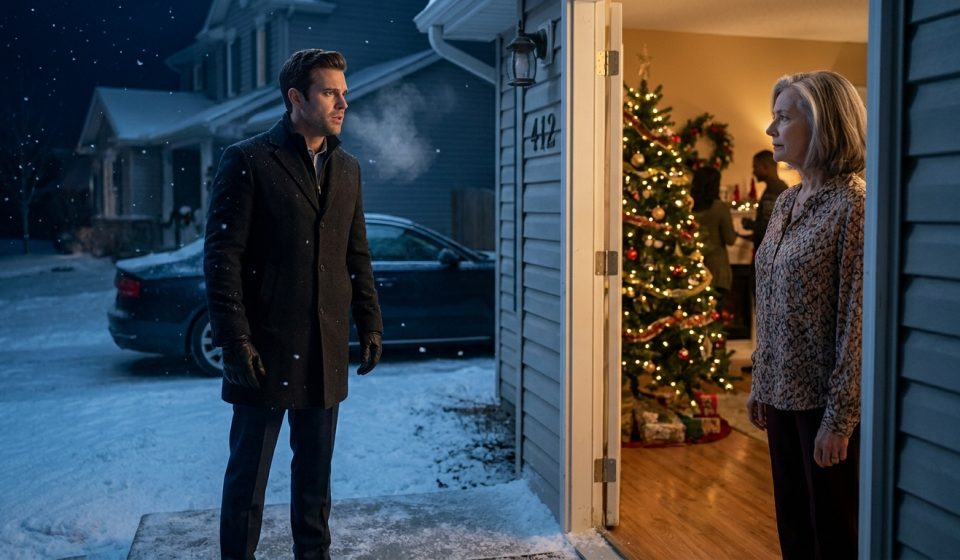
Showed Up For Christmas, But Mom Said, “Sorry, I Think You Have The Wrong House.” Shocked, I Left.

I showed up for Christmas expecting to spend the holiday with my family, but my mother looked straight at me and claimed I had the wrong house. Minutes later, my brother called to explain why they couldn’t let me in—and then forgot to hang up.
Tap LISTEN TO THE FULL STORY below to reveal the narrated video and start listening.
I showed up for Christmas expecting warmth, family, and a place at the table, but instead I stood shivering outside my parents’ house while my mother looked directly at me and said she thought I had the wrong address. Christmas lights glowed through the windows, laughter spilled from inside, and I tried to understand what was happening. When I told her it was me, she calmly shut the door in my face.
For a moment, I honestly thought it might be some cruel joke. Then I heard glasses clinking and people laughing behind the closed door. As I turned toward my car, my phone buzzed. My brother Adam was calling. He told me not to be upset, but said I knew they couldn’t let me inside. When I demanded an explanation, he called the situation “complicated” and begged me not to make a scene.
Then someone spoke in the background. They said I still thought helping with rent meant I was automatically included. Nobody on the call seemed to realize I’d heard it. I hung up without another word and stared at the house—the same house I’d helped save when Dad fell behind on the mortgage, where I’d paid utilities and groceries and even helped cover Christmas gifts when Mom’s budget was tight.
🎧 Listen to the Complete Story
Press ▶ Play below to enjoy the full narrated story.
They hadn’t simply left me outside.
They had acted as though I didn’t exist while continuing to accept everything I provided.
Standing beside my car in the freezing air, I unlocked my phone. I opened my banking app and looked at the automatic transfer supporting their housing expenses. Then I looked at the emergency account and the secondary card I’d given Adam to help with gas.
For years, helping had seemed normal.
When Dad’s job was restructured three years earlier, my paycheck helped keep the house from slipping toward foreclosure. When Mom needed emergency dental surgery, my card covered it. Adam had only recently finished college and was supposedly still “figuring things out,” so whenever he needed something, I stepped in.
I had a stable career because I’d spent years sacrificing for it. I skipped nights out, lived in a tiny apartment, ate cheap meals, and worked my way upward. My family called that luck.
But whenever they had a financial emergency, my luck suddenly became their solution.
Mom would call because the electricity bill was behind. Adam needed gas. Dad was stressed about the mortgage. A request that was supposed to last “just for a bit” gradually stretched into months and then years.
I became their silent safety net.
Invisible until somebody needed money.
Even before I showed up for Christmas and found myself rejected at the door, there had been warning signs. At Thanksgiving the previous year, I’d paid for the entire dinner—the roast, desserts, and even the expensive wine Dad wanted.
Then it was time for the family photograph.
Instead of asking me to join them, Mom handed me the camera.
“Come on Jake,” she said. “Just one of the family.”
I laughed it off at the time.
Later, Adam received a brand-new SUV for his birthday. When I questioned why our parents had never done anything comparable for me, Mom explained that I didn’t need things because I was so independent.
Independent.
It sounded much better than saying alone.
I kept telling myself those moments didn’t matter. I was the older brother, the dependable one, the person everyone knew they could call.
But now I was standing outside the Christmas celebration I’d helped support, replaying the sentence I’d just overheard.
Helping with rent didn’t mean I was automatically included.
And with my banking app still open in my hand, I finally had to decide what being excluded was going to mean for everything I’d been quietly paying for.