
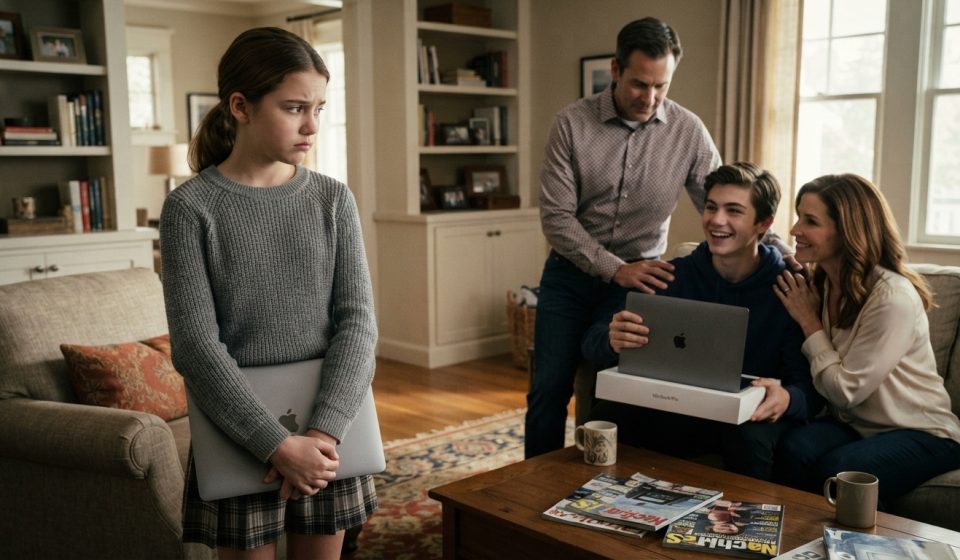
My Family Never Treated Me Like Their Own. So When My Grandmother Finally Acknowledged Me As An Equal To My Golden Child Brother, My Parents Were Seething.

After a lifetime of watching my brother receive the love, attention, and opportunities I had to earn for myself, I thought I had finally escaped my family’s favoritism—until one loss brought everything rushing back.
Tap LISTEN TO THE FULL STORY below to reveal the narrated video and start listening.
Growing up, my family never treated me like their own, and the difference between how my parents treated me and my older brother Tyler was impossible to miss. When I was seven and Tyler was ten, his birthday came with a hired DJ, inflatable water slides, and food from his favorite restaurant. My birthday that same year brought no cake, no presents, and only a half-hearted birthday message passed along by my dad. By then, I had already learned the painful lesson that, in my parents’ eyes, I mattered less than my brother.
That pattern followed us everywhere. At fourteen, I spent six months babysitting so I could save enough money to buy myself a laptop. The moment Tyler saw it, he wanted one too. Instead of asking him to save for it, my parents bought him a much better model the very next day. When my disappointment showed, my dad told me to stop being ungrateful and appreciate what I had. Even school, which should have been my escape, became another place where their favoritism followed me.
In sixth grade, I practiced endlessly for a solo in the winter concert, but my parents arrived only at the very end because Tyler had gotten an eyelash in his eye. When I told my mom how much that hurt, she called me dramatic and said I should be more understanding of his “health issues.” I kept working anyway. I joined debate club, earned straight A’s, and won first place in a statewide writing competition, yet my parents still told me I wasn’t good enough and should be more like Tyler.
🎧 Listen to the Complete Story
Press ▶ Play below to enjoy the full narrated story.
The double standard became even clearer as we grew older. When Tyler raised an algebra grade from a D-minus to a C-minus, my parents celebrated with dinner and expensive concert tickets. Meanwhile, I could be grounded for arriving home ten minutes late after studying at the library. Tyler could stumble home at four in the morning smelling like beer and hear “boys will be boys,” while my achievements were treated like inconveniences.
By junior year, I earned a place in a prestigious summer program at Stanford, one of only three students selected from our state. I was thrilled, but when I announced it at dinner, my mom barely reacted and my dad asked who would feed the dog. The next day, I overheard my mom complaining that my “fancy academic stuff” was just an attempt to make Tyler feel bad. They even refused to drive me to the airport because Tyler had a game, so a friend’s parents stepped in instead.
College brought more of the same. I earned a scholarship, only for my mom to suggest I decline it because someone else probably deserved it more. Tyler barely graduated high school and chose not to attend college, yet my parents bought him a truck as a graduation gift. Years of being dismissed left damage I had to work hard to understand, but I still built a life for myself. I graduated with honors, found a good marketing job, and bought my own condo by twenty-nine.
I thought I had finally reached a point where their approval no longer controlled me. Then my grandmother died. She had built a successful restaurant business from scratch and left behind a substantial estate. Unlike my parents, she had always treated Tyler and me equally—and what she left behind was about to force my family to confront that difference in a way none of us could ignore. She had shown up for the moments my parents skipped, remembered both of our birthdays, and paid attention to what mattered to each of us.
For once, I believed her final wishes might reflect the fairness I had spent my entire childhood missing.