She Was Sleeping In 8A – When The Captain Asked If Any Combat Pilots Were On Board.

She thought seat 8A would give her four quiet hours after months of flying combat missions. Then the 767 suddenly dropped—and Harper realized something was terribly wrong in the cockpit.
Want To Hear The Full Story? Continue Below, Then Tap LISTEN TO THE FULL STORY To Reveal The Narrated Video And Start Listening.
Harper Cole was asleep in seat 8A when something changed—not an announcement, not a passenger moving beside her, but the sound of the engines. The pitch shifted into a subtle descending whine that immediately pulled her military instincts awake. She had spent too many hours in the air not to notice when an aircraft sounded wrong.
Harper was exhausted. After nine months aboard an aircraft carrier, flying F/A-18 Super Hornets from a pitching deck in the darkness of the Philippine Sea, all she wanted was a few quiet hours. Now she was sitting in premium economy on a Boeing 767 flying from Dallas to Seattle, hoping the steady hum of the engines would finally let her rest.
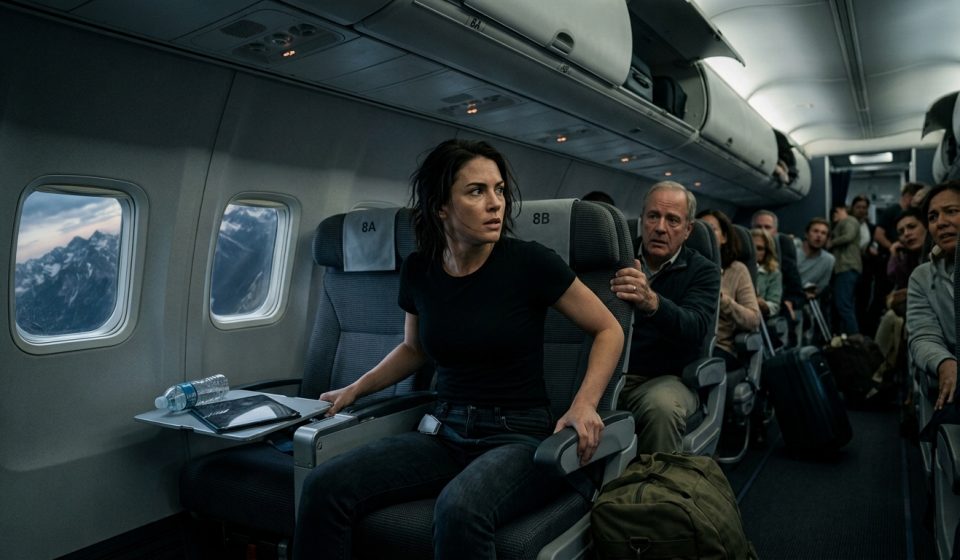
The cabin was dim and quiet. The passenger beside her worked on a spreadsheet, while Harper kept to herself with her headphones on. At 34,000 feet, the flight seemed perfectly ordinary. The autopilot held the aircraft steady, and Harper eventually closed her eyes.
She wasn’t sure how long she’d been asleep when the movement of the aircraft woke her.
This wasn’t ordinary turbulence.
The 767 suddenly dropped hard enough to throw passengers against their seat belts. Someone screamed. The man’s laptop beside Harper lifted from his tray before crashing back down. Overhead bins rattled violently as panic swept through the cabin.
Harper’s training immediately took over. Severe clear-air turbulence could cause a sudden loss of altitude. It was frightening, but it could happen.
What bothered her was what came next.
Instead of a controlled recovery, the left wing dipped sharply. Passengers slid against their armrests. Then the nose pitched upward too aggressively while the engines surged to recover lost airspeed.
The aircraft felt heavy and strangely uncontrolled.
Harper pulled off her headphones and looked through the window. The horizon was tilted, and the nose of the aircraft was oscillating instead of settling into stable flight.
The frightened passenger beside her gripped his armrests and asked what the pilots were doing.
Harper quietly gave him the answer she didn’t want to believe.
They were overcorrecting.
She watched the curtain toward first class sway as the aircraft struggled to stabilize. Normally, after severe turbulence, passengers would quickly hear the captain’s reassuring voice explaining what had happened.
But no announcement came.
Only the engines and the nervous murmurs of nearly 200 passengers filled the cabin.
Eventually the aircraft leveled, but Harper could feel something important had changed. The precise, locked-in sensation of the autopilot was gone.
Someone was flying the 767 manually.
And whoever had the controls appeared to be struggling.
Then the emergency intercom chimed.
Ten seconds later, the PA crackled to life.
But the voice that came through wasn’t the calm, practiced voice of the captain.
It was a flight attendant.
She was breathing heavily, and even through the static, Harper could hear the panic in her voice.
There was a medical emergency aboard the aircraft.
Then came a request Harper never expected to hear while sitting quietly in seat 8A:
Were there any military pilots on board?