My Parents Used My Childhood Accident To Control Me For 25 Years, Then Tried To Get Conservatorship When I Married Another Deaf Person, So I Exposed…

My parents spent twenty-five years treating me as helpless because of a childhood accident, but when another fire changed my life, I discovered that their need for control was far more dangerous than I realized.
Tap LISTEN TO THE FULL STORY below to reveal the narrated video and start listening.
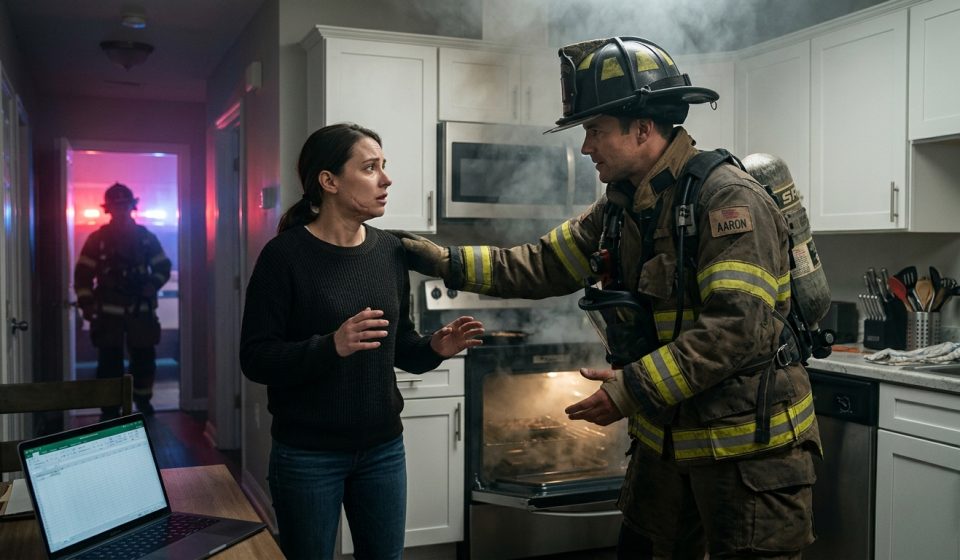
My parents used my childhood accident to control me for 25 years, and I thought I had finally escaped their expectations. I was working from home, completely absorbed in spreadsheets, when the lasagna in my kitchen began burning. By the time I noticed the smoke, the room was already filling with it. Being deaf meant I couldn’t hear the smoke alarm. But the worst part wasn’t the burning food. It was the memory that returned without warning: I was seven years old again, trapped inside my family’s burning car, watching my father through the window.
That childhood accident had changed everything. My father rescued my pregnant mother first, then my four-year-old sister, Aisha. Before he could reach me, an explosion left me with permanent hearing loss and visible scars. Twenty-five years later, the smell of smoke brought every terrifying moment rushing back. I froze in my apartment, unable to think clearly or even use my phone because my hands were shaking uncontrollably. Thankfully, my neighbors noticed the emergency and called 911. A firefighter named Aaron entered my apartment and gently guided me outside using calm, clear gestures.
Once we were safe, my neighbors gathered around us, and the building manager appeared furious. I couldn’t understand every word being said, but I could tell people were blaming me for what had happened. Aaron stepped between us and made them back away. He stayed with me through the aftermath, even accompanying me to the hospital when staff couldn’t immediately provide an interpreter. Instead of assuming I couldn’t communicate or make decisions, he insisted that the hospital find a way to communicate properly with me. For the first time that day, I felt someone was actually listening.
🎧 Listen to the Complete Story
Press ▶ Play below to enjoy the full narrated story.
Then my younger sister, Aisha, arrived.
She signed a sarcastic question about whether I had been involved in another fire, as though the disaster was something I had deliberately caused.
Her reaction hurt, but it wasn’t entirely surprising.
Aisha had spent years resenting the attention I received after our childhood accident.
She seemed to believe that being injured had somehow given me an advantage.
I would have traded every moment of sympathy for the chance to grow up without scars or hearing loss.
When Aaron returned with a sandwich, Aisha immediately began flirting with him.
He responded politely but handed the food to me.
Before leaving, he wrote down his telephone number and told me to text if I needed anything.
That small gesture meant more than he probably realized.
My apartment was no longer somewhere I could safely stay, and Aisha quickly made it clear that I wasn’t welcome at her place.
She said she couldn’t have a fire hazard living with her.
I ended up checking into an unpleasant hotel, frightened and exhausted.
My job was completely remote, and I’d managed to save my laptop, so I could still work.
Financially, I wasn’t helpless.
Emotionally, however, I was struggling.
I barely left my room for three days.
My parents weren’t much help either.
When I contacted them, they said they couldn’t manage taking care of me right now.
I wanted to explain that I wasn’t asking anyone to take care of me.
I just needed somewhere safe to sleep while I figured out what came next.
My parents used my childhood accident to control me for 25 years, and even now, they couldn’t seem to distinguish temporary help from permanent dependence.
Eventually, I remembered the firefighter who had treated me like a capable adult.
I texted Aaron and told him where I was staying.
Soon, small care packages began appearing at the hotel’s front desk.
They contained actual meals and thoughtful handwritten notes.
One joked that hotel vending machines were depressing.
For the first time since the fire, I smiled.
Aaron didn’t treat my deafness or scars as reasons to pity me.
He simply noticed that I was having a difficult week and found a way to make it easier.
Then, without warning, the packages stopped.
My messages went unanswered.
I began to wonder whether he’d decided that helping me was more trouble than he’d expected.
After several days of silence, I finally contacted the firehouse.
What they told me made my stomach drop.
Aaron had entered a burning warehouse to rescue someone, and the roof had collapsed on him.
He was in intensive care.
I stood staring at the message, realizing that the one person who had helped me feel safe after the fire might now be fighting for his own life.