My Parent Filed Legal Action When I Wouldn’t Sell My Dead Husband’s House For My Stepbrother’s Startup. I Taught Them A Lesson They’ll Never Forget. Allison…

My parents filed legal action when I refused to sell my late husband’s house for my stepbrother’s startup, but they underestimated how far I would go to protect my children’s future.
Tap LISTEN TO THE FULL STORY below to reveal the narrated video and start listening.
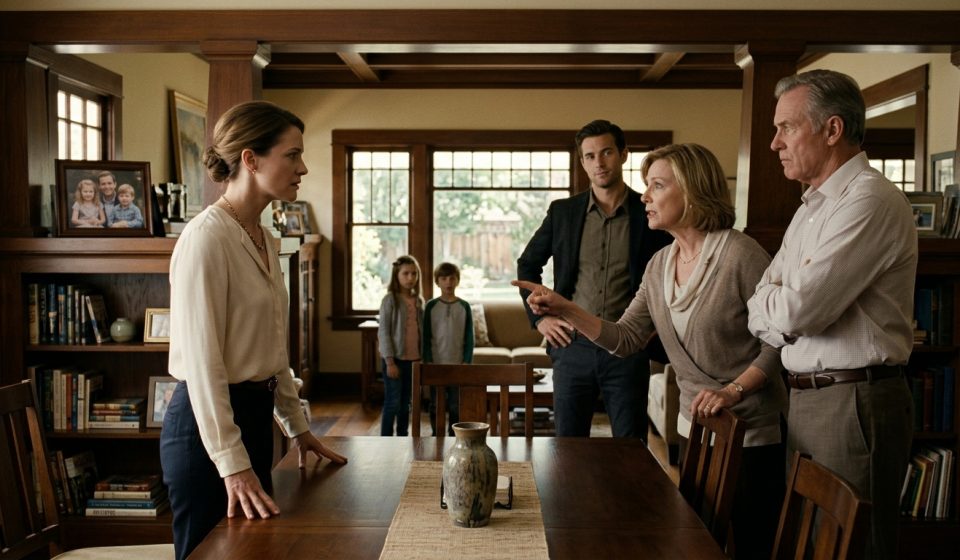
My parents filed legal action when I refused to sell my dead husband’s house to fund my stepbrother’s startup. My mother, Virginia, called me selfish, insisting the property was simply sitting there while Derek needed money. But Christopher had left that home to me and our two children. It was where Sophie and Nathan had grown up, and where their father had planned for them to feel secure after his death. When I refused to sell, Virginia threatened to challenge his will. I stared at her, struggling to believe my own mother was willing to sue me over our home.
Three years earlier, I had lost Christopher to pancreatic cancer when he was only thirty nine. We had been married for thirteen years, and our children, Sophie and Nathan, were still young. Watching him endure nineteen months of treatment had been devastating. He was my closest friend and a devoted father who wanted nothing more than to protect his family. I believed his death would be the hardest experience we would ever face. Instead, the months after his funeral revealed something painful about my own relatives. My mother, Virginia, and her husband, Robert, began suggesting changes to my life as a newly widowed parent. Their advice initially sounded caring. They talked about how difficult it must be to manage a household alone and offered occasional help with childcare and chores. But their questions kept returning to the same subjects: Christopher’s insurance money and the value of our family home itself.
Virginia had become increasingly devoted to Robert’s adult son, Derek, treating him as the family’s favorite while overlooking my needs. Derek was twenty nine and had already cycled through several unsuccessful business ventures. His taco truck had closed within months, his marketing agency never attracted a client, and an investment in NFTs had cost his parents money. Each failure came with excuses rather than accountability. Meanwhile, Christopher had carefully arranged our finances during his illness. He updated his will, increased his insurance coverage, and organized our assets to protect the children. Our four bedroom Craftsman bungalow in Riverside, California, had been his pride. He had improved it over the years, creating a backyard for the children and a garage workshop Nathan loved. After Christopher died, his insurance paid off the mortgage. The home was worth approximately seven hundred thousand dollars, but to me, its value went far beyond mere money.
🎧 Listen to the Complete Story
Press ▶ Play below to enjoy the full narrated story.
At first, Virginia and Robert offered to help. They handled yardwork, took the children on outings, and asked whether maintaining the house was exhausting. I appreciated their attention until their suggestions became more pointed. About seven months after Christopher’s funeral, Virginia proposed downsizing. Four bedrooms were excessive, she argued, when only three of us lived there. I reminded her that Sophie and Nathan had already lost their father. I would not ask them to lose the home where they remembered him, too.
Virginia seemed to accept my answer, but the subject kept returning. She began discussing money tied up in property instead of earning investment returns. Then Derek appeared at family dinners with a new business proposal: an app connecting customers with local chefs who would prepare meals in their homes. He brought spreadsheets, projections, and stories about interested investors. What he did not have was the money to launch it. His plan required four hundred and fifty thousand dollars, and traditional lenders had little reason to trust his record.
Virginia and Robert had already put sixty thousand dollars of retirement savings toward Derek’s idea. Soon they were explaining that I could unlock the equity in Christopher’s house, move somewhere cheaper, and invest the difference in my stepbrother’s future. Robert even offered to find an agent who could sell quickly. Then the pressure spread to my children. During visits, they suggested a smaller house might be an exciting adventure. Derek began inspecting rooms and commenting on upgrades that could attract buyers. I was starting to understand what they really wanted.