My Girlfriend Had Already Told Her Co-Workers She Was Single. So I Spent 10 Days Quietly Moving Out, Box by Box, While She Wasn’t Watching, and Left a Note on…

When I discovered my girlfriend was pretending to be single at work, I didn’t confront her or start an argument—I began quietly disappearing from the life she no longer wanted me in.
Tap LISTEN TO THE FULL STORY below to reveal the narrated video and start listening.
My girlfriend had already told her co-workers she was single, although we’d been together for two and a half years and shared an apartment. My name is Caleb, I’m 29, and I work in heating, ventilation, and air conditioning. It’s not glamorous work. My hands are often covered in grease, and my truck permanently smells of refrigerant. But I’d spent years earning certifications, building a reliable client base, and creating a financially stable life. I paid my bills, had savings, and owed nobody money. I was proud of what I’d accomplished, even if my profession didn’t impress everyone. For a long time, I believed Lauren felt the same way about me. We had built a comfortable relationship together, and I never imagined that one day she’d start treating my presence like something embarrassing.
Lauren and I first met at a friend’s cookout. She was 26, had a laugh that could carry across the entire yard, and started teasing me almost immediately for putting ketchup on a hot dog. I teased her back for eating a hamburger with a knife and fork, and she laughed so hard she nearly choked. We exchanged numbers that evening and quickly became inseparable. Back then, she worked as an office assistant at a small insurance company. Our lives were simple: we’d return home around the same time, make dinner, argue playfully about what to watch, and fall asleep together on the couch. Our families liked each other, and after about a year, we moved in together rather than continuing to pay for two apartments. Nothing about our relationship seemed extraordinary, but that ordinary happiness meant everything to me.
Then, about eight months ago, Lauren landed a new position as an administrative coordinator at an upscale real estate firm downtown. The office was filled with expensive European cars, stylish exposed-brick interiors, and the kind of luxury that made my work truck look completely out of place. She was thrilled about the better salary, impressive title, and opportunities for advancement. I was genuinely happy for her. I took her out to celebrate and told her how proud I was. At first, everything seemed normal. She’d come home excitedly describing the agents, properties, and new responsibilities. But after approximately a month, I began noticing small changes. Lauren started spending heavily on expensive clothes, heels, and handbags. I understood wanting to look professional in her new workplace. What troubled me was how her new expectations slowly began extending to me.
🎧 Listen to the Complete Story
Press ▶ Play below to enjoy the full narrated story.
It started with comments about my appearance. When I wore jeans and flannel on weekends, she’d remind me that button-up shirts existed. Before dinner outings, she’d suggest leaving my work boots at home. Each remark sounded harmless, but together they made me feel increasingly inadequate.
Then came the invitations. Lauren began attending dinners, networking events, open houses, and parties with her new colleagues. Initially, she brought me along. But at one gathering, even though I’d worn clean jeans and an ironed shirt, she barely introduced me to anyone.
I stood alone near the appetizers while she moved confidently through the room. When an agent asked who I was, Lauren described me as her plus one. Not her boyfriend. Just someone accompanying her.
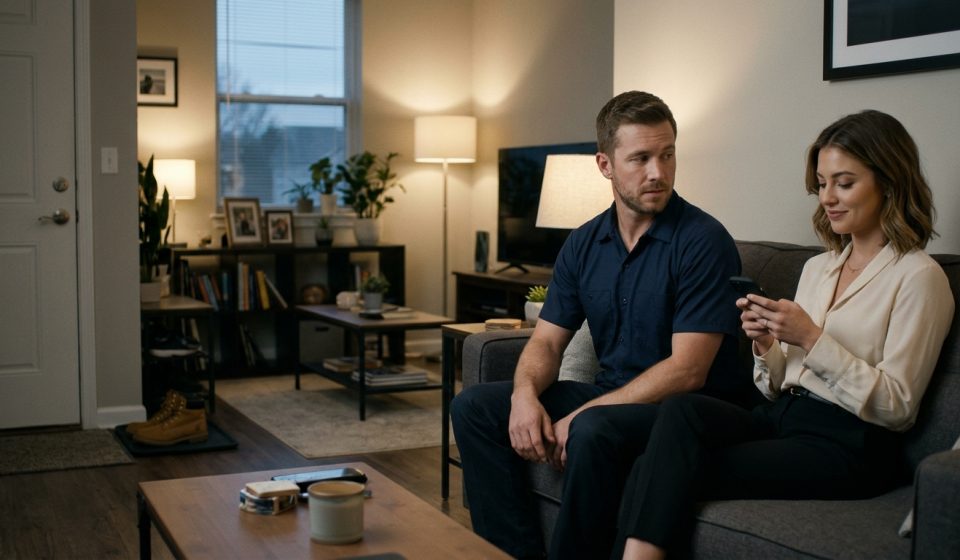
My girlfriend had already told her co-workers she was single—or at least was beginning to erase our relationship from the version of her life they saw. I didn’t fully understand it yet, but that evening was the first time I felt like a stranger standing beside the woman I loved.
Afterward, her social calendar became increasingly crowded. Fridays belonged to work events, Saturdays to property showings, and Sundays to brunch with colleagues. Our evenings together became rare.
I asked whether we could spend a weekend doing something as a couple. She already had plans and suggested the following weekend instead. But that weekend never seemed to arrive.
Then I noticed something else. Lauren had once shared photographs of us regularly, from ordinary dinners to embarrassing moments that made us laugh. Now her social media was filled with glamorous office gatherings and expensive properties.
Three months passed without a single new photograph of us together. I tried telling myself it was nothing. But the more I watched her new life take shape, the harder it became to ignore one painful question:
Was Lauren simply changing—or was she deliberately creating a future that no longer included me?