
My Father Forced Me To Get Out Of Our House Because I Refused To Sell My New Laptop To Fund My Brother’s Shopping Spree. An Hour Later, They Were…

My father threw me out for refusing to sacrifice something I’d worked hard to buy, but the strange things my parents had been hiding made me realize the argument over my laptop might only be the beginning.
Tap LISTEN TO THE FULL STORY below to reveal the narrated video and start listening.
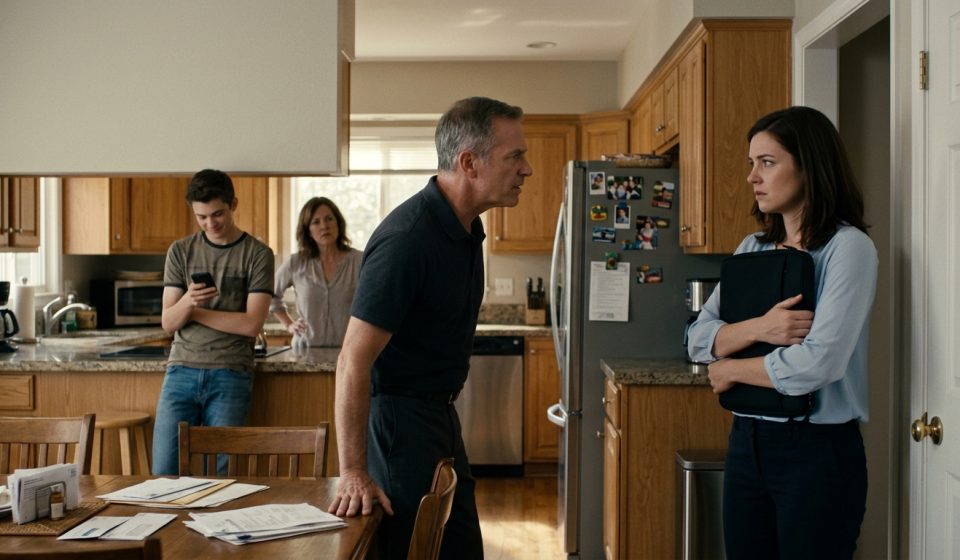
I refused to sell my new laptop when my father demanded that I turn it into cash for my brother’s shopping spree. I had saved every dollar from my own paychecks, and the laptop was something I genuinely needed. But my father didn’t care. His voice was cold as he ordered me to sell it immediately. My brother Tyler stood nearby, casually scrolling through his phone, explaining that he wanted money for a Saturday trip to the mall. New sneakers and shopping mattered more to him than the sacrifices I had made. I stared at them, unable to believe that my family expected me to surrender something important for another unnecessary purchase. When I questioned the demand, my father slammed his palm against the table and accused me of forgetting my responsibilities to the family. My mother joined in, calling me selfish for refusing.
I told them I had already given Tyler enough. For years, I had been expected to help whenever he wanted something or made another mistake. This time, however, I couldn’t bring myself to agree. My father’s expression hardened. He ordered me to pack my bags, then grabbed my arm and shoved me toward the door. I stumbled, striking my knee against the floor. Nobody offered to help. Tyler watched with a smug expression and confidently predicted that I would return because I had nowhere else to go. I picked up my purse and laptop, struggling to control my anger and humiliation.
As I left, I warned Tyler that he had no idea what he had started. The truth was, I had no plan. I was twenty-six years old, standing outside my family home with a bruised knee and a laptop bag digging into my shoulder. My name is Dana Whitfield, and I had spent four years working as a claims adjuster for a regional insurance company. My job involved reviewing complicated accounts of accidents, fires, and property damage, searching for details that didn’t match the paperwork. I was trained to notice inconsistencies, yet inside my own family, I had spent years overlooking behavior that should have alarmed me.
🎧 Listen to the Complete Story
Press ▶ Play below to enjoy the full narrated story.
Growing up, our household operated according to an unspoken rule: Tyler received forgiveness, while I received responsibility.
When he wrecked our mother’s car at seventeen, I worked extra shifts at a pharmacy to help cover the insurance deductible. When he dropped out of community college, the family expected me to remain understanding and avoid causing further problems.
I learned that being dependable meant asking for very little in return.
The laptop represented something different.
I had saved for three months to purchase a modest computer that would help me complete a professional certification course. Finishing that course could eventually qualify me for a promotion into senior claims review.
I refused to sell my new laptop because giving it up meant sacrificing an opportunity I’d earned through my own effort.
But after leaving the house, I began remembering details that hadn’t seemed important before.
Two weeks earlier, I had overheard my father speaking quietly on the phone, telling someone that he only needed until the fall. When I asked what the conversation concerned, he abruptly dismissed it as insurance business.
That explanation bothered me because my father barely understood his own insurance arrangements.
Then there was my mother’s unusual question a week before the confrontation.
While washing dishes, she had casually asked whether I still possessed my physical Social Security card.
I told her it was in my old room and asked why she wanted to know.
She claimed she was simply curious.
At the time, I had accepted both explanations.
But standing outside the house after being thrown out, I couldn’t stop wondering why my parents had suddenly become so interested in financial matters and my personal documents.
What had they been doing without telling me?