
At Our Housewarming, I Got Dizzy And Threw Up Blood. Honey, Let’s Go To The ER. But On The Drive, My Husband Dumped Me In The Woods. Your Life Ends…

At our housewarming, I threw up blood before my husband offered to take me to the emergency room, but what he did during that drive was far more terrifying than the illness itself.
Tap LISTEN TO THE FULL STORY below to reveal the narrated video and start listening.
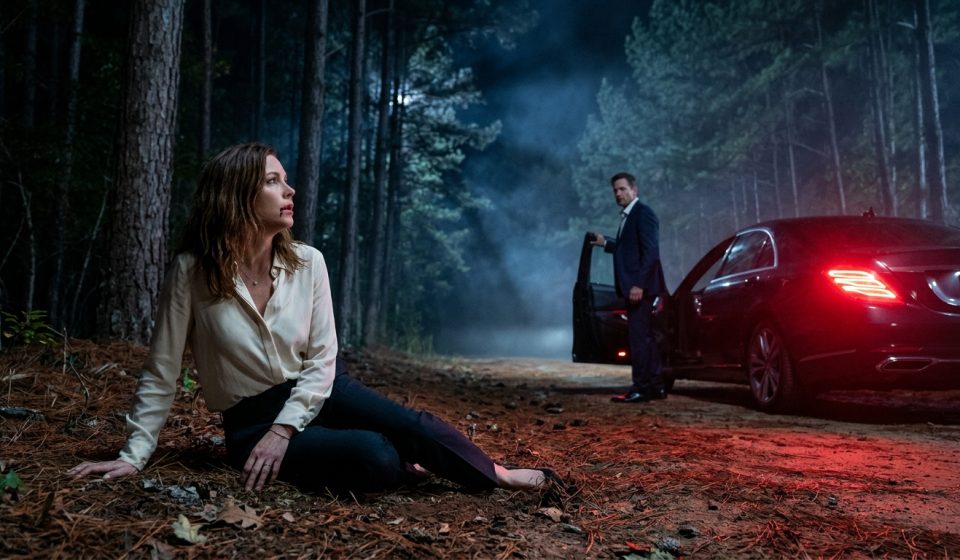
At our housewarming, I threw up blood after becoming suddenly dizzy, and my husband Carter immediately suggested taking me to the emergency room (Husband Abandoned Me in the Woods). But instead of getting me medical help, he abandoned me in the woods and admitted that he had poisoned me. The next thing I could focus on was the harsh fluorescent lighting of an emergency room. A pulse oximeter was clipped to my finger, and a doctor in blue scrubs was calling out alarming numbers. My blood pressure had fallen to 78 over 44, and my heart rate was 138. My body was failing, but my mind was still working. When I heard the medical team discussing treatment, I struggled to speak through a throat that felt painfully raw. I knew enough about toxicology to understand the danger, and I desperately needed the doctors to know that too.
The emergency physician, Dr. Marcus Oliver, had spent twelve years at Cedar Trust Medical and had additional training in toxicology. When I mentioned the effects of the suspected poison on the heart’s electrical activity, he briefly froze. He wanted to know who had taught me such things. I told him nobody had just explained them to me. I used to be someone who explained them to others. Nearby stood Henderson, the driver who had rushed me to the hospital. His cap was twisted tightly between his hands. He had driven at terrifying speed along Route 9, carrying a woman who was bleeding and barely conscious. When he asked whether he should contact my father’s lawyer, I whispered one name: Howard. I also told him to bring a notary that night, not the following morning.
Dr. Oliver continued emergency treatment and ordered continuous cardiac monitoring. My laboratory results showed signs of strain on my heart, but I was still alive. Then the medical team noticed bruises around my wrists, marks left when Carter had gripped me violently. The doctor ordered the injuries and medical evidence to be carefully documented. He wanted every bruise, needle mark, and blood sample recorded. When he addressed me as Mrs. Whitfield-Pierce, I almost laughed. Nobody at our housewarming had used my maiden name in years. My mother-in-law Brenda had made sure of that. She also insisted that the catering staff treat her as the lady of the house, even though the property belonged to my father’s trust. That contradiction was only one of the many things Carter’s family had chosen to ignore.
🎧 Listen to the Complete Story
Press ▶ Play below to enjoy the full narrated story.
They thought my father, Richard Whitfield, had simply left behind money.
They never seemed interested in understanding how he had earned it.
In 1987, he established Whitfield Analytical Labs in a small strip mall, performing blood testing for county coroners who lacked their own equipment.
By the time he died, his company held forensic toxicology contracts with eleven state medical examiner offices.
I had practically grown up inside that laboratory.
While other children learned about baseball from their fathers, mine taught me about gas chromatography.
I eventually earned a bachelor’s degree in biochemistry from Harvard and remained there for a master’s degree in forensic toxicology.
I could have taken over the company immediately after graduating.
Instead, I met Carter Pierce at a fundraiser.
Carter appreciated my quiet personality, but over time, that silence became something he could exploit.
He liked explaining technical subjects incorrectly at dinner parties without being challenged.
He liked that I remained quiet when his mother insulted me in front of other guests.
I allowed those moments to pass because I loved him.
After losing my father, being loved had seemed like something gentle and comforting.
I never told Carter everything I knew about detecting substances in blood.
I never explained that my name appeared on four patents involving rapid alkaloid screening.
I let him believe the version of me that his mother preferred.
And now, lying in a hospital bed after being abandoned in the woods, I could no longer ignore how dangerous that silence had become.
There was also something about my father’s death that had never troubled me before.
He had died suddenly in his sleep at sixty-three, without a known history of heart disease.
His death had been classified as natural.
But Brenda had attended his funeral, and she had been unusually emotional.
She claimed they had grown close while my father was dating her sister.
As I watched the medical staff work around me, one unsettling question began forming. Was there something about my father’s death that I had never understood?