
My Parents Didn’t Know I’d Already Moved Everything Valuable Out Of My Apartment. While Was Still In The ICU, They Emptied It And Sold What Was Left.

My parents emptied my apartment while I was lying injured in the ICU, believing I was too helpless to stop them. But when a nurse asked whether I’d authorized anyone to enter my home, I realized my parents weren’t worried about whether I would survive.
Tap LISTEN TO THE FULL STORY below to reveal the narrated video and start listening.
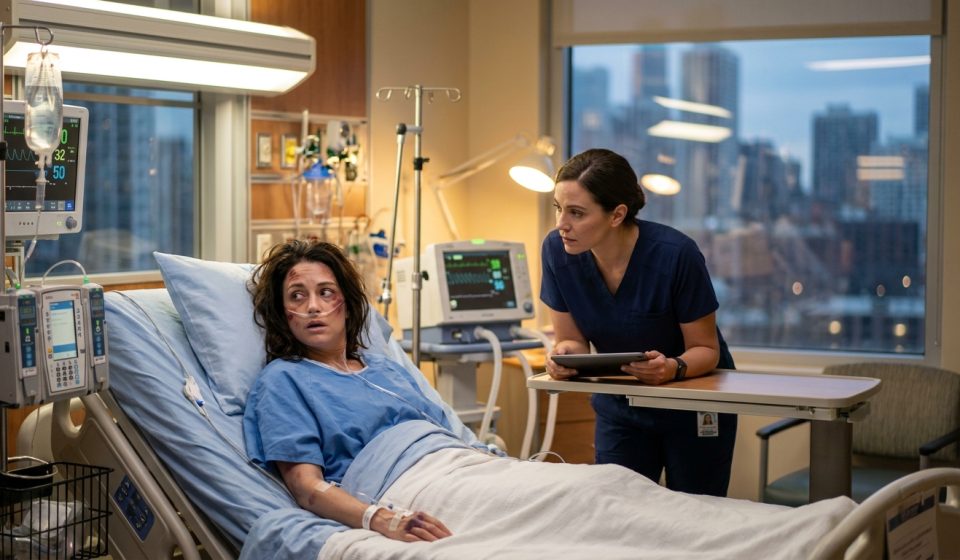
My parents emptied my apartment while I was still in the ICU, but I didn’t know what they’d done when I first opened my eyes. Fluorescent lights blurred into long white streaks above me as a monitor beeped steadily beside the hospital bed. Something cold flowed through the IV in my arm, and every breath sent pain through my chest. When I tried lifting my head, the oxygen tubing and pounding behind my eyes forced me back onto the pillow.
A nurse noticed I was awake and asked if I could hear her. I managed a tiny nod. Then her expression changed. She hesitated before asking a question that immediately made my heart skip: Had I authorized anyone to enter my apartment while I was hospitalized? I whispered no. The nurse explained that someone had been repeatedly calling the hospital, insisting I was unconscious and incapable of making decisions. They wanted confirmation of my condition.
A chill spread through me that had nothing to do with the temperature of the hospital room. Only one possibility came to mind. My parents, Richard and Diane Carter, still had an old emergency key to my apartment. The accident had nearly killed me, yet instead of simply wondering whether their daughter would survive, someone appeared unusually interested in whether I was conscious enough to make decisions.
🎧 Listen to the Complete Story
Press ▶ Play below to enjoy the full narrated story.
I immediately asked for my phone, but the nurse gently explained that it had been destroyed in the crash. For a moment, I closed my eyes and thought about everything that had happened between my parents and me over the years.
Richard and Diane had spent much of my adult life behaving as though anything I owned would eventually become theirs to control. Every achievement somehow became something they deserved credit for. Every paycheck was treated like family money. Whenever I received a promotion, another conversation followed about how I could use my increased income to help everyone else.
Five years earlier, I’d finally moved into an apartment of my own. Yet even then, I’d made one mistake that suddenly seemed terrifying.
During a plumbing repair, my landlord had replaced a lock. I’d trusted my parents when they promised to return the emergency key afterward.
They never did.
At the time, confronting them over a spare key seemed like another exhausting family argument I could postpone. Now, lying in intensive care after a highway collision that doctors would later tell me could have ended very differently, I understood how dangerous that decision might have been.
Then the nurse told me something even worse.
My parents hadn’t asked how I was doing.
According to her, they mostly wanted to know how long I would remain unconscious.
Those words hurt almost as much as my injuries. While surgeons had been working to stabilize internal bleeding and repair multiple fractures, my parents apparently weren’t waiting anxiously beside my hospital bed.
Across town, something very different was happening.
Neighbors would later describe seeing a moving truck pull up outside my apartment building. My father stood outside directing workers while my mother carried a clipboard. Whenever anyone questioned them, Diane calmly claimed their daughter had asked them to handle everything while she recovered.
Then boxes began disappearing from my home.
Trip after trip, movers carried my possessions outside. Furniture followed. Household belongings were loaded into the truck until the apartment was nearly empty.
Nobody watching understood the truth.
I was unconscious in intensive care less than twenty miles away.
I had never given Richard or Diane permission to remove a single possession.
As the reality began sinking in, I tried moving toward the edge of the hospital bed, but a burst of pain through my ribs stopped me. The nurse immediately warned me that I couldn’t get up yet.
Then another nurse entered carrying a replacement phone.
Her expression made my stomach tighten before she even spoke.
She placed it carefully into my hand and told me there was something I needed to see.
The screen illuminated.
More than sixty missed calls, messages, and voicemails had accumulated since the accident. Among them were several messages from my downstairs neighbor.
One read simply: “Marilyn, call me as soon as you can.”
Another warned that she didn’t think my parents should be doing this.
Then I opened the next message.
It contained six photographs—and as I stared at the first image, I began to understand exactly what my parents emptied my apartment really meant.