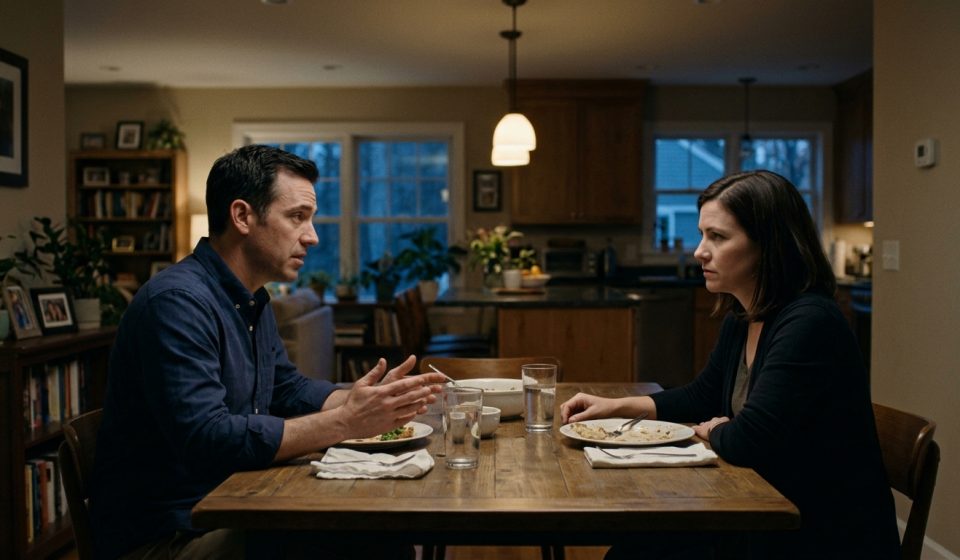
21 Days Of Silence. She Thought She Was Punishing Me, But I Tasted Freedom. On Day 21, I Didn’t Apologise. I Filed The Papers. Three Weeks Ago…

What began as 21 Days of Silence meant to punish a husband slowly became the first real peace he had experienced in years, leaving him questioning everything about his marriage.
Tap LISTEN TO THE FULL STORY below to reveal the narrated video and start listening.
The 21 Days of Silence began after an argument that should never have become a crisis. For five years, my wife had used the silent treatment whenever I did something she disliked. Sometimes it lasted days. Other times, weeks. But this time, something felt different. Instead of desperately trying to win back her affection, I began noticing how peaceful our home could be without constant criticism. What she intended as punishment was beginning to feel like freedom, although I hadn’t yet understood just how much that realization would change me.
It started on an ordinary Thursday evening when I mentioned wanting to meet some coworkers at a sports bar to watch a playoff game. Nothing unusual. Just a few friends enjoying basketball together.
My wife immediately put down her fork and questioned why I would rather spend time with drinking buddies than with her. I explained that seeing friends didn’t mean I valued our marriage any less. But she treated my request as though I were choosing someone else over her.
Eventually, she told me to enjoy my little boys’ night out and not expect her to wait up. I was exhausted from constantly worrying about upsetting her, so I decided to go anyway.
That simple decision triggered three weeks of silence.
During the first few days, I reacted exactly as I always had. I apologized, brought her coffee, asked whether we could talk, and tried to explain myself. I even offered to cancel future plans with friends.
Nothing worked.
🎧 Listen to the Complete Story
Press ▶ Play below to enjoy the full narrated story.
She moved around our suburban home as though I were invisible. There were no morning greetings, no questions about my day, and no ordinary conversations. She ate without setting a place for me and watched television while deliberately ignoring my presence.
Over our five years of marriage, this routine had become painfully familiar.
Whenever she disapproved of something, she stopped speaking until I surrendered. Usually, I would apologize within a week, accept whatever restrictions she wanted, and feel grateful when she finally forgave me.
But the 21 Days of Silence began revealing something I had overlooked.
I was tired of repeatedly apologizing for wanting a normal life outside our marriage.
As the days passed, I started thinking about friendships that had gradually disappeared. My wife rarely demanded that I stop seeing someone outright. Instead, she questioned their influence, criticized how much time I spent with them, or became distant whenever I returned from visiting them.
Eventually, declining invitations seemed easier than facing another argument.
Then I thought about the hobbies I had abandoned.
I used to enjoy crime shows, but she considered them too disturbing. Whenever I watched one, she sighed and complained until I changed the channel.
Even my interest in joining a gym had become complicated. She insisted I was already perfect and questioned why I wanted to change myself. What initially sounded supportive gradually made me feel guilty about pursuing my own interests.
Now, strangely, her refusal to speak gave me room to notice these patterns.
I could watch television without anticipating criticism. I could message old friends without worrying about being questioned afterward. I could think about exercising without preparing an explanation.
Most importantly, I could move around my own home without constantly wondering whether something innocent might provoke another confrontation.
By the tenth day, the quiet no longer felt like a punishment.
It felt like a glimpse of a different life.
And by the end of the first week, I had already stopped doing the one thing my wife had always expected from me: begging her to speak again.
For the first time in years, I was beginning to wonder what would happen if I simply stopped trying to repair a situation I hadn’t created.