
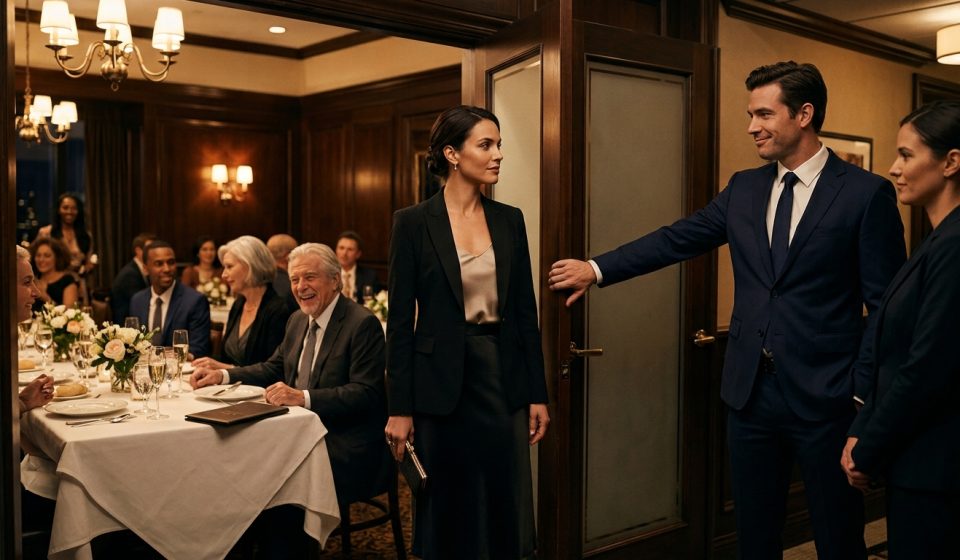
I Paid For My Parents’ 40th Anniversary Dinner. My Brother Met Me At The Door. “Immediate Family Only-You Stopped Counting Years Ago.” Mom Waved Me Off.

Thalia paid for her parents’ 40th-anniversary dinner—then her brother stopped her at the door and said she was no longer immediate family. She didn’t argue. She simply gave the restaurant manager one folder and left. By the time her father opened it during his toast, the entire celebration was about to collapse.
🎧 Listen to the Complete Story
Tap LISTEN TO THE STORY below to continue the full narrated story.
📖 Prefer to Read?
Scroll down to enjoy the complete written version of this story.
I paid for my parents’ 40th anniversary dinner. My brother met me at the door. Immediate family
only.
You stopped counting years ago. Mom waved me off. I told the manager one sentence and left.
Mid-toast, dad read the bill folder, turned to mom and said, 40 years and you let me toast to 40
years? Three weeks earlier, my mother, Rosalyn, called while I was at work and asked me to sign
a simple restaurant form. She said Corbyn was overwhelmed planning the anniversary. The form
was not from the restaurant.
It was from an escrow company and it authorized my brother to speak for every family
stakeholder during the sale of Dixon’s Table, the neighborhood restaurant my parents had run for
almost their entire marriage. I called her back. What sale? She laughed softly.
This is why Corbyn handles business. You make everything sound alarming. I am listed as a
stakeholder.
Only because your father added both children years ago. Sign it and stop creating work. Corbyn
took the phone from her.
You do not review family, Thalia. You either help us or admit you left. He hung up.
I review construction contracts for a hospital network. Missing clauses, altered dates, and vague
authority are the things I am paid to notice. My family called that coldness whenever I noticed
them.
I searched the county records that night. The restaurant still belonged jointly to my parents, but a
company called Cobalt House Development had applied to demolish it and replace it with luxury
apartments. The contact person was Corbyn.
I called him the next morning. It is only a concept, he said. You filed for demolition.
That is how development works. Does dad know? A pause. Dad knows the building needs work.
That was not my question. You have not earned the right to question anything there. Minutes
later, mom posted in the family group chat, some people mistake distance for wisdom.
Please keep your father’s anniversary peaceful. He deserves one evening without business
drama. Nobody used my name.
They did not need to. Dixon’s table had started with mom’s inheritance and dad’s hands. She
bought a failing diner during their first year of marriage.
Dad rebuilt the kitchen at night, sold his tools when payroll fell short, and slept in a booth during
the first winter because they could not afford both rent and a furnace repair. Mom ran the front.
Dad fixed everything that broke.
He never called it his restaurant. He called it ours. The anniversary dinner was supposed to be
my peace offering.
I reserved a private room at the steakhouse where dad had proposed, paid the deposit, and
ordered a small brass key as his gift. It matched the original front door key from Dixon’s table, the
one dad carried until Corbin changed the locks for security. The next morning, I drove to the
restaurant.
My access card no longer opened the side door. Through the glass, I saw the old photograph of
my parents had been removed. In its place hung a glossy rendering of Cobalt House.
Corbin opened the door, but kept his body in the gap. We are closed. You open in 20 minutes,
then return as a customer.
Behind him, Marlene, dad’s oldest server, stopped arranging mugs. Where is dad? I asked.
Home, resting.
He told me he was working breakfast. Corbin smiled. Plans change when people get old.
You would know that if you were around. I pointed at the rendering. Does he know this is here?
This place has carried him long enough.
Now it can carry the rest of us. Our parents own it. Mom owns the story.
Dad owns an apron and a bad back. Marlene looked up. Corbin noticed and stepped outside,
pulling the door shut behind him.
Then he leaned close. You keep thinking blood gives you a seat at the table. It does not.
Usefulness does, and you stopped being useful years ago. He locked the door while I was
standing there. I walked around the building and found the public zoning notice.
The hearing was scheduled for the morning after the anniversary dinner. That timing explained
the party. Corbin planned to let dad toast the family legacy, then announce the development in
front of relatives.
The next morning, he could show the zoning board photographs of a smiling father beside the
project and call it family approval. The dinner was not a celebration. It was evidence.
That night, dad called from the restaurant office. Your mother says you are upset about the
building. Are you selling it? No.
Corbin mentioned investors someday. I told him I am not ready. Did you sign anything? He brings
stacks, insurance, payroll, supplier forms.
I sign where he puts the tabs. My fingers tightened around the phone. Please do not sign
anything else until someone independent reviews it.
He sighed. If this is about feeling left out, come for coffee tomorrow. It is not about feeling left out,
but Corbin had already taught him how to hear me.
Two days later, Marlene arrived at my apartment with a grocery bag. Inside was the old brass
reservation ledger from the restaurant’s first decade. Corbin told me to throw it away, she said.
He is clearing the office for appraisal. The first page listed mom’s inheritance, but beneath it, dad
had recorded every pension withdrawal, unpaid hour, and tool he sold to rebuild the diner. Across
the bottom, both of them had signed one sentence.
Everything we put into this place belongs to both of us because we are building one life. It was
not a deed, but it showed what dad believed he had spent 40 years building. Several recent
pages had been cut out.
Marlene lowered her voice. Corbin and your mother were in the office late last week. She said
your father had signed the consent.
Corbin said the notary had handled it. I went to my parents’ house instead. Mom blocked the
porch.
Your father is sleeping. Dad appeared behind her wearing his restaurant shirt. I handed him the
zoning notice.
Did you approve demolition? He read it, then looked at mom. Demolition? She reached for the
paper. It is preliminary.
Corbin explained it. No, he did not. For one second, dad sounded like himself.
Then she touched his wrist. You signed the family transition consent in March, after your
procedure. We discussed reducing your stress.
Dad frowned. He had spent March recovering from shoulder surgery and taking medication that
blurred whole days. I signed insurance forms.
That was part of it. I asked, who notarized the consent? Mom’s face did not show fear. It showed
irritation that I had reached the right question.
This is why nobody tells you anything, she said. You arrive after years away, wave papers
around, and make your father feel foolish. Dad handed the notice back to me.
We will talk after the anniversary. After the zoning hearing, he blinked. As mom guided him
inside, I saw an envelope on the hall table marked Cobalt House Closing.
She saw me see it and shut the door. I sat in my car with the brass key in my palm until its teeth
left marks. Was I wrong for continuing after my father asked me to stop, even though he clearly
had not been told the truth? If you think I was protecting him, please leave a like so I know I was
not the only one seeing the trap.
If you think I crossed a line, tell me in the comments because I asked myself that every night. The
envelope gave me the law firm handling the sale. I emailed the attorney, Celia Hargrove, one
careful sentence.
I am a listed family stakeholder who was asked to sign an escrow authorization without
disclosure. Please preserve all records related to my father’s consent because his capacity and
presence at signing are disputed. Celia replied within an hour.
She could not share protected documents, but she asked whether dad had appeared by remote
video before a notary on a Monday in March. That Monday mattered. Dad had been in physical
therapy from morning until afternoon.
I knew because I drove him. He left his wallet at home and I paid for lunch. I sent Celia the
therapy receipt and the time-stamped parking ticket still in my glove compartment.
She called me. The closing is paused until both titled owners confirm directly, she said. Was my
father on the video? I cannot answer that.
Preserve your records and do not contact the notary. Corbin called 10 minutes later. You
contacted escrow.
I asked them to preserve evidence. You just endangered a deal worth more than you will ever
contribute to this family. Was dad on the notary video? He laughed softly.
You always need a villain. It makes being unnecessary feel noble. He said the buyer would walk
unless the closing happened the morning after the anniversary.
Mom had placed a deposit on a smaller home. Employees had been promised severance. If the
sale failed, every person who lost money would know my name.
By evening, they did. Corbin posted that I had interfered with our parents’ retirement because I
could not accept the business passing to him. Mom wrote that she was heartbroken by jealousy
between her children.
Then Corbin suspended Marlene for stealing the ledger. I paid her rent for the month and helped
her apply at a hotel restaurant. She cried when I told her.
That hurt more than anything my family said about me. The anniversary menu tasting happened
the next day. I had booked it months earlier, so the restaurant called me to confirm.
When I arrived, Mom, Corbin, Aunt Della, and several cousins were already seated. Dad’s chair
was empty. Mom looked wounded as though I had invaded my own reservation.
We thought you canceled, she said. The account is in my name. Corbin leaned back.
Then explain why Dad thinks you are trying to take his restaurant. I am trying to stop a sale he
does not know about. Mom pressed two fingers to her temple.
Please do not do this in public. You brought an audience. I brought family because I no longer
feel safe speaking to you alone.
Then the manager placed the tasting invoice beside me. Corbin reached for it. The manager kept
her hand on the folder.
The account holder is Ms. Dixon. His face tightened. Under the menu charges was an added
request Corbin had submitted that morning.
A projector, screen, and a presentation titled Cobalt House Family Legacy Announcement
scheduled immediately after Dad’s toast. He planned to use the dinner I paid for to announce the
demolition as if Dad had approved it. I slid the page across the table.
Aunt Della whispered, does your father know? Mom answered, he will be relieved when he
understands how secure his future is. Relieved is not the same as informed, I said. She looked at
me.
You are not losing a father. You are losing control of a building you visit twice a year. I told the
manager to keep the projector on the order and to bring the final bill folder during Dad’s toast.
Corbin smiled, thinking I had surrendered. That evening, Celia called again. The remote notary
platform had preserved its audit file.
The session used Dad’s name and identification number, but the internet address belonged to
Corbin’s office above Dixon’s table. The identification scan came from a photograph of Dad’s
license stored in payroll files. The video was dark, but when the screen brightened, a reflection
appeared in the office window.
A woman sat before the camera wearing Dad’s baseball cap and holding a towel over the lower
half of her face. The thick silver bracelet on her wrist was clear. Mom wore that bracelet every
day.
It had belonged to my grandmother. It appeared in church photos, holiday pictures, and the
anniversary invitation. Celia could not send me the protected video, but she issued written notice
that the consent was invalid, the sale was suspended, and the notary record was under review.
Now the whole plan made sense. The buyer’s option expired the morning after the anniversary. If
the original consent failed, Corbin needed Dad smiling beside the development announcement so
he could pressure him to sign clean papers at breakfast.
I called Dad and asked to meet alone. A minute later, Corbin texted me the dinner seating chart.
My name had been removed.
Beside Dad was a place card reading Corbin Dixon, future owner. Under it, he wrote, immediate
family only. Do not make us remove you.
I printed the notary preservation notice, zoning application, projector request, therapy receipt,
escrow deadline, and the ledger page signed by my parents. I arranged them by cause, not
emotion. On top, I placed Celia’s number and one sentence in large type.
Call before nine in the morning if you do not consent. Then I added the brass key. The key
proved nothing.
It reminded Dad what the documents were about. On the anniversary night, I arrived early.
Through the private room doorway, I saw Corbin place the future owner card beside Dad’s plate.
Mom adjusted it until it faced the guests. The projector waited behind the curtain. I found the
manager, handed her the leather folder, and said, when my father raises his glass, please give
him this and tell him the final approval must come from the owner before morning.
I had already paid the full dinner balance so nobody could turn the truth into an argument over
money. Dad arrived and started toward me. Corbin moved faster.
His hand landed flat against my chest. Immediate family only tonight. You stopped counting years
ago.
Mom waved me off from across the room so I stepped back. Corbin smiled and returned to the
party. I went to my car with the old reservation ledger on the passenger seat.
My cousin June had agreed to sit near Dad. She did not know every detail. She only knew
nobody should take the folder from him.
Her first message came 20 minutes later. He keeps asking where you are. Then, your mom says
you chose work.
Then, Corbin is starting the slideshow. I set the phone on the steering wheel. Dad stood up.
Manager gave him the folder. He found the key. Inside, Dad opened the folder expecting the bill.
The invoice sat on top, marked paid in full under my name. Beneath it was Corbin’s projector
request, then the demolition application, the invalid notary notice, the internet address tied to
Corbin’s office, the therapy receipt proving Dad was elsewhere, and the bracelet image beside a
photograph of Mom wearing it. June told me later that Dad read every line slowly.
Corbin tried to start the slideshow. Dad said, turn it off. Mom reached for the folder.
June set her water glass on its edge and said, he is still reading. Dad reached the ledger page
last. His thumb rested on the promise he and Mom had signed in their first year.
Everything we put into this place belongs to both of us because we are building one life. He
looked at the bracelet on her wrist. Did you sit in Corbin’s office wearing my cap while someone
used a photograph of my license? Mom said, you were recovering.
We were protecting you from stress. Did you pretend to be me? The sale was for both of us. That
was not a denial.
Corbin stepped in. Dad, Thalia twisted routine documents because she cannot stand that you
trust me. Dad held up the projector request.
Did you plan to announce yourself as owner tonight only after you approved it? Dad looked at the
future owner card already printed beside his plate. Then he turned to Mom. 40 years, and you let
me toast to 40 years.
She began to cry. She said her inheritance had bought the restaurant. Dad had become
sentimental and Corbin understood what survival required.
Dad asked when was I your husband or your signature? Do not humiliate me in front of everyone,
she whispered. He tapped the paid invoice carrying my name. The daughter you locked out paid
for your audience.
The least you can do is let them hear the truth. Corbin reached for the folder. Dad closed it, put
the brass key in his pocket and called Celia on speaker.
He gave his full name and said he had never consented to sell or demolish Dixon’s table. Celia
confirmed the transaction was suspended and no closing would happen without his direct
approval. The buyer’s deadline would expire before morning.
Corbin’s deal ended before dessert. The projector stayed dark. Dad left carrying the folder.
June followed and pointed toward my car. He opened the passenger door, saw the old ledger and
stood in the light rain for a moment before getting in. You knew they would not let you through the
door, he said.
I knew they might not, and you paid anyway. It was still your anniversary gift. He looked back at
the windows.
There is no anniversary tonight. Before we drove away, he turned the brass key under the
dashboard light. I thought Corbin changed the locks because I was getting forgetful.
He changed them before the zoning application. The next morning, Dad appeared at the zoning
hearing with Celia. He stated that the application had been filed without his informed approval.
The board withdrew it. The developer let the option expire and demanded its deposit back from
Corbin’s company. The title insurer opened a fraud review.
The notary’s commission was suspended. Corbin’s lender froze the credit line he had secured
against the expected sale proceeds. Dad found the real motive in Corbin’s office two days later.
Corbin had already spent money on consultants and deposits for a house he could not afford. He
had promised Mom a penthouse in the new building and a monthly management payment for life.
Her preferred apartment was circled in blue beside the words, finally something that is mine.
They were not protecting Dad’s retirement. They were trading his life’s work to rescue Corbin’s
gamble and reward Mom for choosing him. Marlene returned with back pay.
Dad apologized to her in front of the staff and promised the restaurant was not being sold. Aunt
Della posted a photograph of Corbin’s future owner place card in the family chat and wrote, we
were not protecting peace. We were protecting a plan.
Nobody answered with a heart. Dad removed Corbin from every restaurant account and changed
the office locks. When Corbin said, you are choosing her over your son, Dad answered, I am
choosing the child who gave me a choice.
Mom moved into the smaller house she had already reserved. Dad did not follow. Their
separation was private and slow.
He did not erase 40 years, but he stopped allowing her to speak for him. She called me three
times. First, she said I embarrassed her.
Then she said I destroyed Corbin’s future. Finally, she said I had taken an old woman’s home. I
let her finish.
I did not take your home, I said. I stopped you from taking Dad’s name off the door. Then I
blocked her.
Months later, Dixon’s table reopened after repairs. Dad kept control, but he placed a share into an
employee trust so the people who carried the restaurant would never again learn their future from
a rendering on a wall. I accepted no ownership.
I asked only for independent review of major decisions until Dad retired. Dad rehung the old
photograph of himself and Mom beneath the original restaurant sign. He did not cut her out.
Below it, he placed the reservation ledger in a glass case, open to their signed promise. Beside it,
he added a card in his own handwriting. A promise matters only while both people are allowed to
read it.
On the first Sunday after repairs, I arrived before sunrise. Dad was polishing the new brass lock
with his apron. Marlene lined mugs along the counter.
Dad handed me the anniversary key. Try it. The key slid in cleanly.
The lock turned and I opened Dixon’s table before anyone else arrived. Dad switched on the
kitchen lights. Outside, the new sign carried his name, the employee’s trust, and no promise
about who counted as family.
I hung the brass key on the hook beside my coat where nobody could use it to lock me out again.