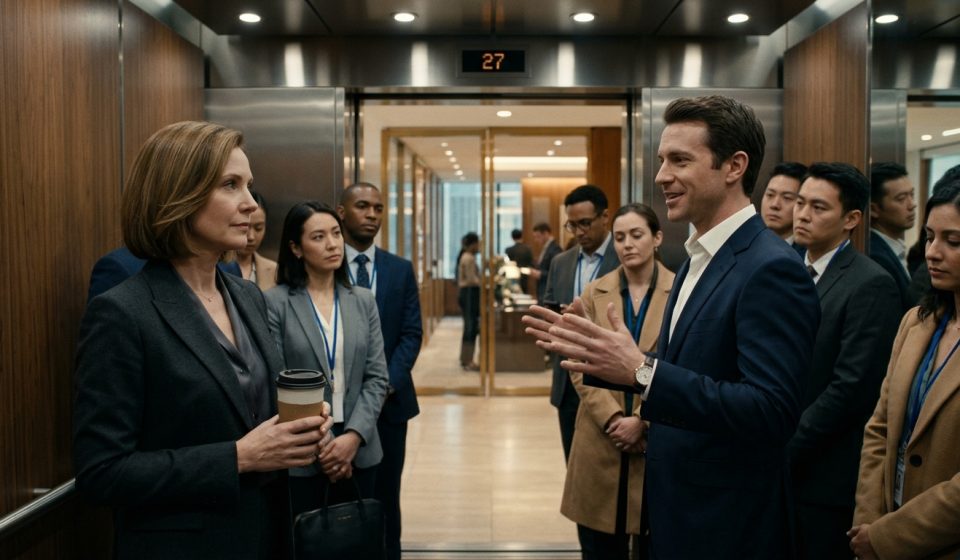
Do You Know Who I Am? The New VP Demanded In Front Of The Buyers. I Just Slid My Business Card To Their Lead Counsel. He Read It Then Looked At The Main Investor.

The arrogant new VP thought he could erase years of my work, but he never imagined how much evidence I had quietly preserved.
Tap LISTEN TO THE FULL STORY below to reveal the narrated video and start listening.
The new VP demanded to know who I was in front of the buyers, but he had no idea how much of the company’s future depended on my work. My name is Virginia Barnes, and I had spent years helping build the relationships and acquisition plans that kept Cinerex moving. Then Ashton Denton arrived with a polished grin and an endless supply of corporate buzzwords. On his first elevator ride, he talked about improving the company and meeting its so-called legacy staff. I stood quietly behind him, holding my coffee. He didn’t recognize me. That was only the beginning.
Ashton entered our office as though he had invented the business world. Before we even reached the twenty-seventh floor, he was explaining his ideas about efficiency to people who had spent years keeping the company running. He talked loudly about lean operations and made jokes about the older employees he expected to meet. I listened without interrupting. I had seen executives like him before: confident enough to dismiss work they had not bothered to understand. When the elevator opened, I stepped out with my bitter coffee and tried to prepare myself for whatever came next. The real surprise wasn’t his attitude. It was how quickly the new chief operating officer moved me into an advisory role. She presented the change as an evolution of my responsibilities, but I understood what it meant. Someone else would now occupy the position I had spent years building, while I was expected to remain quiet.
I thanked the COO, nodded politely, and returned to my office. Then I closed the door and opened a manila folder. I wrote Ashton’s name on it and placed an email chain inside. The messages documented work I had been involved with long before his arrival. Within a week, he removed me from strategy conversations I had helped create. Meetings vanished from my calendar. Two of my best analysts were reassigned to him with promises of greater visibility. One looked apologetic as he packed his chair, but I didn’t ask him to stay. Instead, I started organizing my records. I collected pipeline details, vendor contacts, investor notes, and the history of deals I had managed since 2008. Every document went into a careful system. Ashton could control the meeting invitations and the job titles, but he couldn’t change the years of work behind them. I wanted a record of everything.
🎧 Listen to the Complete Story
Press ▶ Play below to enjoy the full narrated story.
Ashton kept pushing me further away from the work I knew best. At an executive meeting, he presented a deck he hadn’t written and joked about the way things used to be done. I listened while others laughed. Then, during an acquisition preparation call, he described my contributions as foundational but dated. He said the groundwork had been laid and now it was time for someone else to build.
I stared at the screen, hearing my career reduced to a convenient introduction for his ambitions. After the call, I closed my laptop and sat alone in the dark office. I wasn’t ready to confront him without proof. I had spent too long building these systems to let someone rewrite their history with a presentation and a smile.
The new VP demanded to know who I was, yet he had barely taken the time to understand what I had created. He seemed convinced that removing me from meetings would make my contribution disappear. He could reassign employees, take control of conversations, and speak as though every achievement belonged to him.
But the contracts, correspondence, and records told a different story.
So I kept collecting the evidence. Every disappearing invitation made the pattern clearer. Every careless remark gave me another reason to preserve what I knew.
And when the next meeting invitation vanished from my calendar, I began to wonder just how far Ashton intended to go—and what he would do when someone finally questioned his version of events.