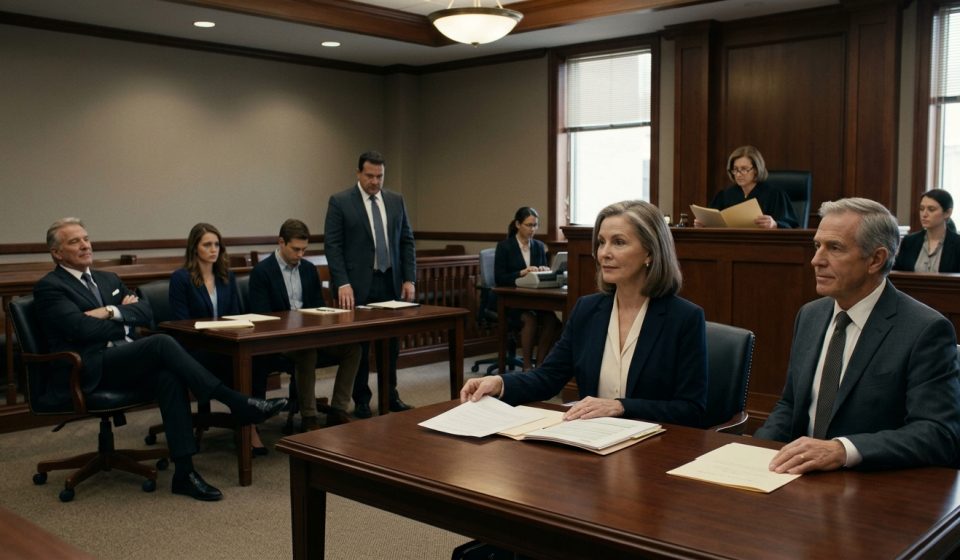
My Lawyer Slid The Deed Across The Courtroom Table. My Daughter-In-Law’s Father Smirked At The Judge This House Belongs To Our Family Now She Promised It.

My lawyer slid the deed across the courtroom table while my daughter-in-law’s father sat there smirking, convinced he had already won my house. But one document was about to challenge everything his family claimed.
Tap LISTEN TO THE FULL STORY below to reveal the narrated video and start listening.
My lawyer slid the deed across the courtroom table while my daughter-in-law’s father watched with a confident smirk. He believed my house belonged to his family because I had supposedly promised it to my son and his wife. My name is Lorraine Whitford, and I was sitting in a courtroom fighting to keep the property I legally owned. My attorney, Terrence Hadwell, had prepared me for this exact moment. We had rehearsed how I would open my folder, place a document on the table, and remain silent. Across the aisle, Garrett Nolasco looked completely certain that the judge would rule in his family’s favor.
Garrett leaned back in his chair with his arms loosely folded and one ankle crossed over his knee. His daughter Megan sat beside him, wearing a navy blazer and nervously playing with a pen cap. My son Drew was there too, but he refused to meet my eyes. He hadn’t looked at me properly since November. Judge Carolyn Pfeiffer opened the proceedings concerning ownership of my home at 1740 Fenwick Lane in Briar Ridge. I was the petitioner, while Drew and Megan were the respondents. Garrett had hired an attorney named Delvecchio, who stood before the judge with the confidence of someone delivering an argument he expected to win. He claimed I had made a verbal promise to transfer my house to the newly married couple.
According to their attorney, my statements at family gatherings had convinced Drew and Megan that the house would eventually become theirs. He argued that they had relied on those promises when making major financial decisions. They had reportedly declined other housing opportunities, changed their plans, and invested more than $41,000 in renovations, including improvements to the kitchen, landscaping, and rear deck. Their lawyer called this reliance legally enforceable under a theory known as promissory estoppel. I listened as ordinary family conversations were presented as binding commitments. Some of the statements sounded familiar, but others had been exaggerated or taken out of context. Most importantly, I had never signed a document transferring ownership of my home to anyone.
🎧 Listen to the Complete Story
Press ▶ Play below to enjoy the full narrated story.
My lawyer slid the deed across the courtroom table only after the other side had explained why they believed my words should determine ownership.
Their attorney claimed that, at Drew and Megan’s engagement dinner three years earlier, I had said the house would always be theirs.
He also described a Thanksgiving conversation in which I supposedly promised that the property would go to them once they settled down.
Even a remark about building equity during a bathroom renovation had become part of their argument.
I remembered some conversations, but not the meanings they were now assigning to them.
I had spoken affectionately about my family’s future. I had not agreed to surrender my property.
Garrett appeared particularly pleased when the attorney described the renovations. He caught me looking toward him and openly smirked.
The judge remained composed, writing notes before inviting Terrence to respond.
Terrence was sixty-three, with gray at his temples and a calm, deliberate speaking style. He never rushed an explanation or raised his voice unnecessarily.
He told the judge that the opposing family’s claim depended entirely on informal remarks supposedly made during social occasions.
There was no signed agreement, no written promise, and no document showing that I had agreed to transfer the house.
He explained that the state’s statute of frauds required agreements involving transfers of real-property interests to be documented in writing.
Then he paused.
The courtroom was quiet enough for me to hear papers shifting across the tables.
Terrence indicated that while the other side had presented memories and interpretations, there was something more concrete that the court needed to consider.
Garrett still looked confident. But he hadn’t yet seen the document waiting inside my folder—and he had no idea how quickly his confidence was about to disappear.