After Firing Me, The CEO’s Nephew Smugly Said, Be Grateful For Your Last $3,800 Pay Cheque. I Smiled, Deposited The Check, And Called My Lawyer. The Nephew Never Read…

The CEO’s nephew thought firing me with a $3,800 paycheck would save the company money, but he had overlooked one detail buried in my contract.
Tap LISTEN TO THE FULL STORY below to reveal the narrated video and start listening.
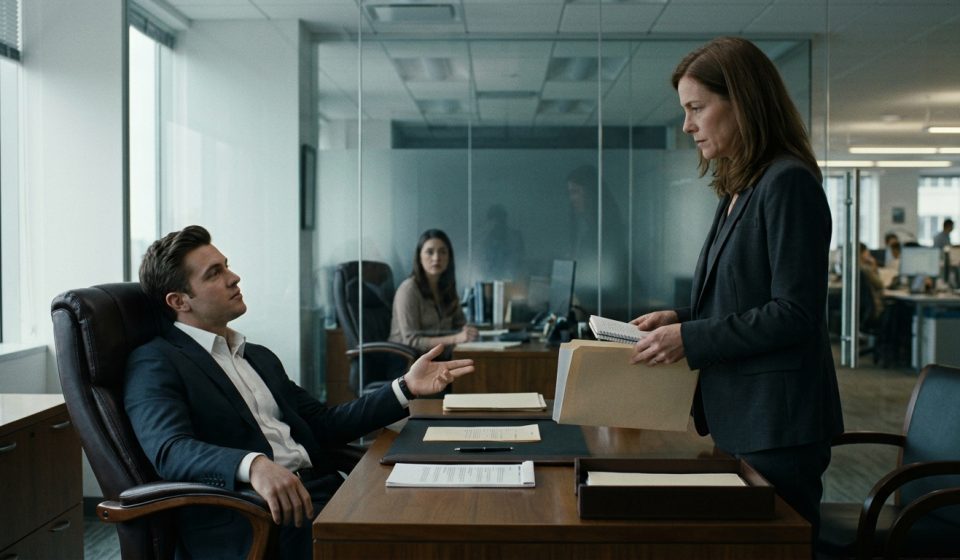
After firing me, the CEO’s nephew smugly said I should be grateful for my last $3,800 paycheck. I stood inside the glass-walled executive office, wearing my old blazer and holding a notebook, while he lounged in the CEO’s chair as though the company belonged to him. I’d devoted fifteen years to developing designs and solving problems that kept the business running through difficult times. Yet this young man, who hadn’t earned the authority he enjoyed, seemed determined to make my dismissal humiliating. I looked at the check, controlled my expression, and quietly prepared to leave.
He wasn’t even the CEO. He was the CEO’s nephew, recently brought into the business and apparently eager to demonstrate his authority. He leaned back with his arms crossed and delivered his announcement loudly enough for the administrative employee outside to hear. What bothered me wasn’t simply losing my position. It was the deliberate cruelty of the amount. The check was for $3,800, not $4,000, and he seemed to enjoy emphasizing every digit. Fifteen years of late nights, product designs, and emergency solutions had been reduced to a sarcastic farewell. He expected anger or desperation. Instead, I thanked him and slipped the check into my folder.
Walking back to my desk, I passed coworkers who suddenly found their computer screens fascinating. Nobody wanted to acknowledge what had happened. I opened the bottom drawer and pulled out a cardboard box, then began collecting the personal belongings I’d accumulated over the years. There was a photograph of the company founder shaking my hand after my first major patent approval, a mug from my old team, and several prototype sketches. Each item reminded me of the work I’d once been proud to do. But one particular memory was becoming more important than anything in that box.
🎧 Listen to the Complete Story
Press ▶ Play below to enjoy the full narrated story.
The nephew walked past while I packed, offering another smug remark about saving the company money. He even winked, as though humiliating a longtime employee were some private joke we shared.
I didn’t respond.
What he didn’t know was that the founder and I had once made an unusual agreement.
Back when the business was small, a dozen employees had worked together through exhausting development sessions, trying to create something valuable enough to build a company around.
I was responsible for designs that eventually became essential to its success.
The founder understood their importance. He also understood that future management might not appreciate the people who created them.
During one conversation, he warned me that anyone who tried to cheapen my contribution could end up damaging the business itself.
Then he handed me a document containing a peculiar contractual provision.
At the time, the wording seemed almost humorous. We laughed about how specific it was, and I signed without imagining I would ever need to rely on it.
Years passed. The company expanded, moved into more impressive offices, and became increasingly concerned with market share and quarterly growth.
I continued working, developing products, solving problems, and helping the company survive difficult periods.
The original agreement stayed safely filed away.
Until that afternoon.
As I placed the last of my notebooks into the cardboard box, the founder’s words returned to me with remarkable clarity.
The nephew believed he’d made an intelligent financial decision.
He thought removing an experienced employee would improve the company’s bottom line.
He had no idea what the founder had written into my contract.
And I had no intention of explaining it to him.
I taped the box shut and walked toward the elevator without arguing or demanding another meeting.
Behind me, the office remained strangely silent.
The nephew thought I was leaving defeated, but as the elevator doors closed, I remembered the exact clause that could turn his cost-cutting victory into the company’s most expensive mistake.