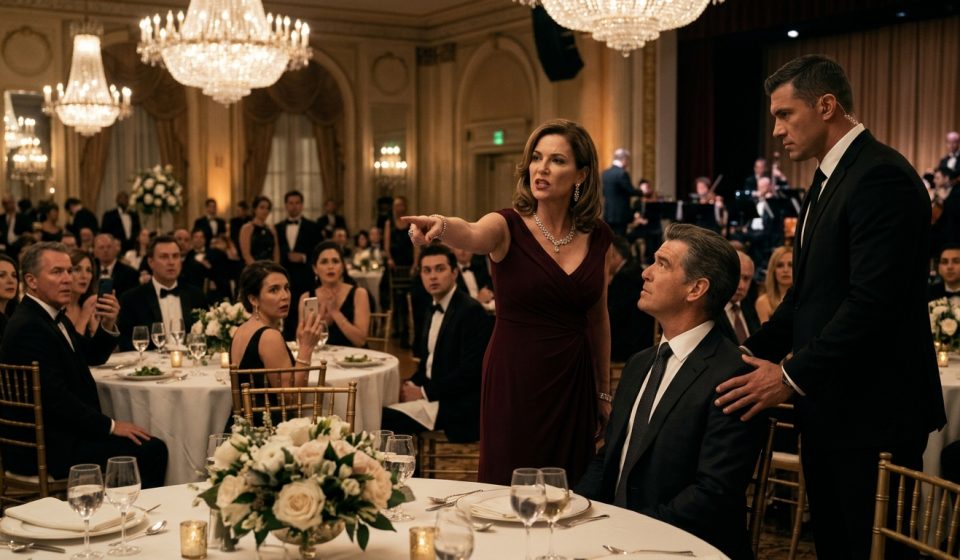
I Was Sitting At The VIP Table. The CEO’s Wife Looked At Me And Said, This Table Is For Principal Stakeholders. Security, Escort Him Out. The Whole Room Was Watching.

I was sitting at the VIP table when the CEO’s wife ordered security to remove me in front of hundreds of guests, unaware of the role I played in the evening’s biggest financial announcement.
Tap LISTEN TO THE FULL STORY below to reveal the narrated video and start listening.
I was sitting at the VIP table when the CEO’s wife approached me with a look that suggested I had no right to be there. The Ritz-Carlton Grand Ballroom in Chicago was filled with nearly 300 investors, executives, financial analysts, and reporters who had gathered for one of the most important corporate announcements of the year. Crystal chandeliers illuminated elegant white tablecloths while a live orchestra played softly in the background. Everything about the evening was designed to project wealth, confidence, and success. My reserved seat was at table two, in the elevated VIP section, where the principal participants in the transaction were expected to sit. I had arrived quietly, dressed in a respectable suit without flashy accessories, and had every reason to believe the evening would proceed professionally. But within minutes, an unexpected confrontation would turn the attention of the entire ballroom toward my table.
My name is Jim Crawford, and I was 49 years old, with 25 years of professional experience behind me. My work involved reviewing major financial transactions and making sure billion-dollar agreements didn’t collapse because someone overlooked an important detail. I grew up in Pittsburgh, where my father spent 32 years working in steel mills and my mother managed a bank branch. Neither came from a privileged background, but they taught me that respect was something people earned through their actions. That lesson stayed with me throughout my career. The ballroom alone had cost approximately $420,000 to rent for the evening, a figure I knew because I had reviewed the invoice weeks earlier. Tonight’s proposed investment was worth $3.2 billion, making it the largest deal in Apex Technologies’ history and the largest transaction my company, Stonegate Capital, had ever undertaken. My responsibility was to examine the details carefully, not attract attention or impress strangers.
I had been sitting quietly at my assigned table, checking my phone, when an elegantly dressed woman approached. She wore an expensive burgundy dress and sparkling jewelry that immediately drew attention. Her name was Diana Pemberton, wife of Howard Pemberton, the founder of Apex Technologies. Diana was not a company officer or board member, but she held an ownership stake and had personally organized the evening’s guest list. She looked at me with practiced politeness and suggested there had been a mistake with the seating arrangements.
🎧 Listen to the Complete Story
Press ▶ Play below to enjoy the full narrated story.
I explained that my reservation was correct and identified myself as a representative of Stonegate Capital. My name card was already on the table, clearly showing my affiliation. But Diana seemed more interested in examining my appearance than checking the seating assignment.
I wore a good suit, but nothing particularly expensive or attention-grabbing. There was no gold watch or designer accessory announcing my importance. Diana apparently interpreted that simplicity as evidence that I didn’t belong among the principal stakeholders.
Her tone grew colder as she explained that the VIP section was reserved for people with ownership positions in the transaction. She suggested that my company probably had seats elsewhere and offered to have someone escort me to the main floor.
I calmly told her that I was exactly where I belonged.
Rather than checking the reservation, Diana summoned a security guard named Eddie Vargas. He approached our table and placed his hand on the back of my chair, making it clear that he expected me to leave.
I had served six years in the Navy before building my career in finance, and that experience had taught me how to remain composed under pressure. I could already see approximately 40 guests watching the confrontation. Several people raised their phones to record, while cameras installed throughout the ballroom continued filming the event.
The entire ceremony was also being livestreamed to investors, meaning the interaction was becoming part of the public record.
I was sitting at the VIP table with a legitimate reservation, yet Diana had decided I needed to be removed without confirming who I was or why I had been invited.
I placed my phone on the table and quietly told Eddie that I intended to remain seated. His hand moved from the chair to my arm, gripping it firmly.
Diana stood nearby with her arms crossed, apparently satisfied that the situation was under control.
But as the cameras continued recording and more guests turned toward us, I realized this was no longer simply a disagreement about seating.
Diana had made a very public decision about someone she knew almost nothing about—and she had no idea what responsibilities came with the seat she was trying to take away.