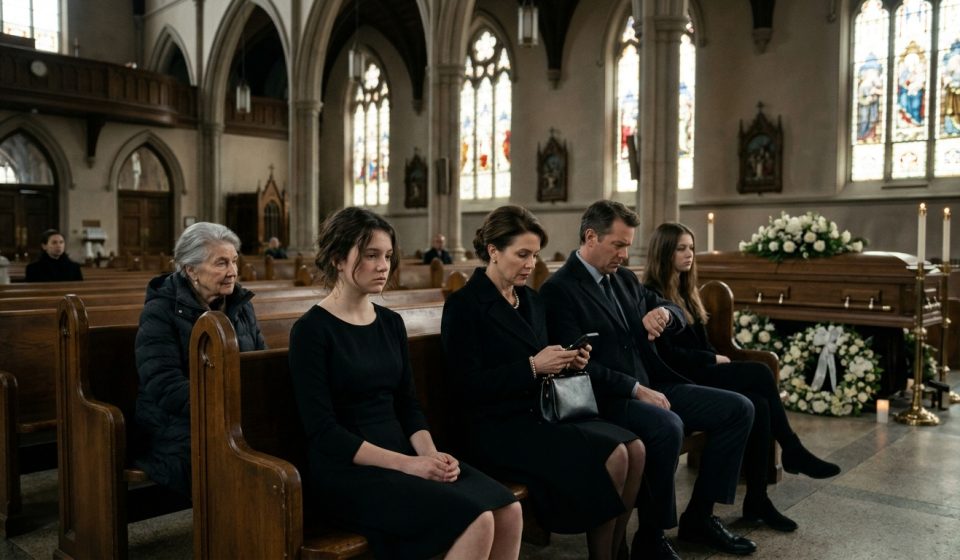
At 14, My Parents Left Me Alone At Grandma’s Funeral To Catch Their Caribbean Cruise. ‘She’s Gone. She Won’t Know We’re Gone,’ Mom Said.

At 14, Emma watched her parents choose a Caribbean cruise over her grandmother’s funeral, never imagining how deeply that decision would change her understanding of family.
Tap LISTEN TO THE FULL STORY below to reveal the narrated video and start listening.
My parents left me at Grandma’s funeral for a Caribbean cruise when I was only 14 years old, and I can still remember how little they seemed to care about the woman we were burying. My grandmother Rose had been the strongest person in my life, someone who worked tirelessly for her family and taught me that kindness mattered more than appearances or money. While I struggled to understand how I could possibly say goodbye to her, my parents were already thinking about their vacation plans. Even before the funeral, I had begun to realize how differently we valued the person we were about to lose.
My name is Emma Catherine Morrison. Looking back at 27, I can trace so much of my life to the days surrounding Grandma Rose’s death. She had raised four children alone after my grandfather died in a factory accident, working as a seamstress during the day and cleaning offices at night. She never allowed those hardships to make her bitter. By the time I was born, she lived in a modest home in Portland, Maine, where our Sunday visits became the happiest part of my childhood.
My parents, Martin and Christine, lived about twenty minutes away with my older sister Amber and me. They cared deeply about status, money, and appearances. Grandma cared about character. She taught me to sew, cook, manage money, and face difficult circumstances with dignity. She made me feel important in ways my parents rarely did. Whenever I doubted myself, she reminded me that kindness and strength could exist together, and that I should never let anyone convince me I was worth less.
🎧 Listen to the Complete Story
Press ▶ Play below to enjoy the full narrated story.
My father’s feelings toward Grandma were complicated. He resented the modest upbringing she had provided, even though she had sacrificed so much to keep her children fed and educated. My mother criticized Grandma’s simple furniture and lack of interest in wealth. She believed Grandma could have married a financially successful man and given the family a more privileged life.
I saw things differently. To me, a woman who had supported four children alone deserved admiration, not criticism. When I tried defending her, my mother dismissed her sacrifices as poverty rather than strength. Eventually, I stopped arguing and continued visiting Grandma every Sunday, grateful for every moment we shared.
Then, when I was fourteen, the doctors diagnosed Grandma with stage-four pancreatic cancer. They estimated she had only three to six months remaining. She lived four months, and I spent as much time with her as possible.
After school, I took the bus to her house, completed homework beside her bed, and read aloud when she became too weak to hold a book. My parents visited occasionally, but their attention always seemed divided. They checked their phones, kept their visits short, and questioned why I spent so much time caring for someone who was dying.
I couldn’t understand their attitude. Grandma wasn’t simply waiting for death. She was still living, still loving, and still the person who had helped shape everything good in me.
My parents left me at Grandma’s funeral for a Caribbean cruise, but the pain surrounding that decision had begun long before the service itself. I had already watched them dismiss her sacrifices, criticize my devotion, and treat precious remaining time as an inconvenience.
Grandma passed away on a Tuesday in November. I was holding her hand, with a hospice nurse and her longtime best friend Margaret nearby. During one of her final moments of clarity, she told me I was a good girl and asked me not to let others change who I was.
I promised her I wouldn’t.
Two hours later, she was gone. And as I faced the terrible reality of losing the person who had always made me feel loved, I still had no idea how much more alone my own parents were about to make me feel.