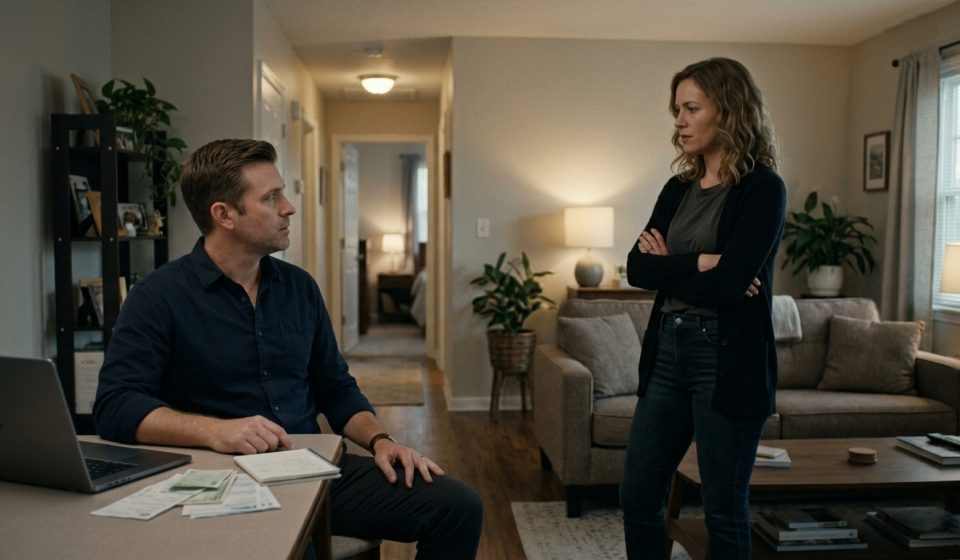
My Wife Said, My Family Is Moving In. If You Can’t Accept That, We’re Done. I Replied, All Right, Then We’re Done. Then, I Packed Up, Moved Out Of Our Rental…

My wife gave me an ultimatum about moving her family into our home, certain I would surrender—but my answer forced her to confront a future she hadn’t planned for.
Tap LISTEN TO THE FULL STORY below to reveal the narrated video and start listening.
My wife said, my family is moving in. If you can’t accept that, we’re done. Those words came from Melissa, my wife of six years, after she announced that her relatives would be living in our rented townhouse. She didn’t ask whether I agreed or whether we could afford it. She simply expected me to accept her decision. I had always tried to keep our household stable, so the idea of taking on more people without a budget or a deadline alarmed me. What surprised me most was how confidently she delivered an ultimatum she apparently never expected me to accept.
My name is Daniel. I’m thirty-seven and work as a logistics manager for a regional distribution company in Ohio. I like predictable routines, balanced budgets, and knowing where our money goes. Melissa is thirty-four and works part-time in event planning. We’ve been married six years and rented the same three-bedroom townhouse for four. We don’t have children, and until recently, I thought we had built a manageable life together. Her family, however, has always been closely involved in our decisions. Daily calls were normal, and even minor inconveniences could turn into emergencies that everyone was expected to solve. I tried to be supportive, but I also believed that helping relatives needed limits.
Melissa’s parents had struggled with money for years. Their employment was inconsistent, their credit card use worried me, and her younger brother Kyle, twenty-nine, rarely stayed at a job longer than eight months. In the early years of our marriage, I sometimes lent small amounts or covered a utility bill when someone was desperate. I never agreed to become the family’s permanent financial safety net. Melissa disliked those boundaries, but usually the arguments passed. Then one evening she came home looking as though she had already decided what would happen. Her parents were losing their house, she told me, and Kyle was in trouble too. All of them were moving into our home.
🎧 Listen to the Complete Story
Press ▶ Play below to enjoy the full narrated story.
I asked how long they planned to stay. She said a few months, perhaps six, without sounding certain. Our townhouse had three bedrooms, but one served as our office and another was barely suitable for guests. I couldn’t see how the arrangement would work without overcrowding and additional expenses. I asked for a real plan: a timeline, financial contributions, and an explanation of how everyone would eventually move out. Melissa brushed those questions aside. To her, family simply made things work.
When I refused to agree without those answers, she delivered the ultimatum: my family is moving in. If you can’t accept that, we’re done. She said it calmly, as though the threat would end the discussion. I looked at her and replied that, in that case, we were done. She laughed, apparently convinced I was bluffing.
But I wasn’t trying to win an argument. I was thinking about the rent, the utilities, and the risk of promising space we didn’t truly have. I was also thinking about what it meant for a marriage when one person could make a decision affecting both partners and then demand obedience.
Melissa had made her choice without my agreement. Now I had to decide whether her threat was something I would quietly accept—or whether I was prepared to follow through on my own answer.
I had seen how quickly occasional assistance became an expectation. A bill paid once could become a monthly request, and a temporary favor could become a standing obligation. This time, the consequences would affect our entire home, our lease, and our savings. Melissa seemed to hear every practical question as an accusation against her relatives. I heard her answers as a warning that no one had thought through what would happen after the moving boxes arrived.