
I Was Stranded On A Work Trip With No Car, Ordered Food For $40, Finance Rejected It, My Boss Smirked Are You Insane, That’s Your Problem…

A $40 dinner became a humiliating workplace dispute when my boss refused to reimburse me for food I had no other way to obtain—and his dismissive response left me wondering how far the company would take this.
Tap LISTEN TO THE FULL STORY below to reveal the narrated video and start listening.
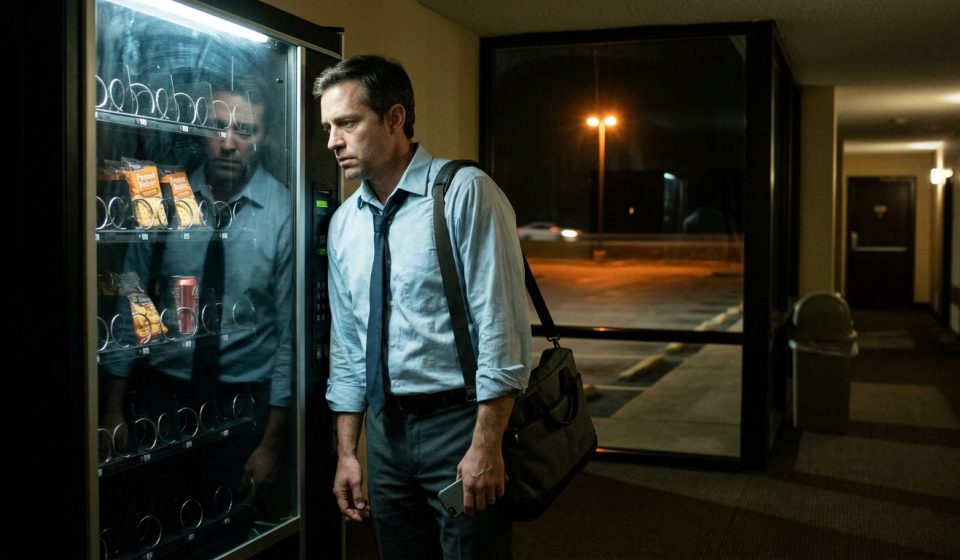
I never imagined that being stranded on a work trip with no car would turn an ordinary dinner into a battle over company expenses. After spending nearly eleven hours without food, I stood in front of a hotel vending machine, staring at nearly empty shelves. All that remained were off-brand peanut butter crackers and a warm Sprite. My tie hung loose, my sleeves were rolled up, and exhaustion had settled into every part of my body. I had spent the entire day reviewing compliance records, yet finding something decent to eat had somehow become the hardest part of my assignment. Outside the hotel, there were no restaurants, sidewalks, convenience stores, or safe walking routes. Just an empty parking lot, a lonely streetlight, and a dangerous highway stretching into the darkness.
The nearest grocery store was more than four miles away, along a road where speeding trucks passed without a proper shoulder. Walking there wasn’t a reasonable option. The rental car that should have been waiting at the airport had been canceled that morning by someone at my company. I discovered this only after arriving at the rental counter with my luggage and laptop bag. My boss, Greg Lassiter, had assured me that the assignment would be simple. He never mentioned that I would have no transportation, that the client’s facility was fifteen miles from the hotel, or that the hotel shuttle wouldn’t take me anywhere near the industrial park.
A friendly employee from the client’s facility had managed to collect me that morning, but his shift ended before my work was finished. I waited outside the building for forty minutes until a receptionist finally arranged a taxi. That ride cost me $22 out of pocket. When I returned to the hotel, the restaurant was already closed. The bar served drinks but no meals. A front desk employee suggested a Denny’s three miles away, then casually reminded me that I would need a car to reach it. I went upstairs hungry, frustrated, and wondering how an ordinary business trip had become such a logistical nightmare.
🎧 Listen to the Complete Story
Press ▶ Play below to enjoy the full narrated story.
Sitting on the edge of my hotel bed, I opened DoorDash and searched for something affordable. Delivery fees made even basic meals surprisingly expensive. Eventually, I found a local diner offering a grilled chicken sandwich, fries, and a drink. With delivery and tip, the total came to $38.47. It wasn’t luxurious, but it was a real meal after an exhausting day. I placed the order, ate quietly while watching television, and carefully photographed the receipt.
When I returned to the office, I submitted my expenses as usual. I included the taxi fare, the meal receipt, and an explanation that no transportation had been provided and no food was available at the hotel. I assumed everything would be straightforward because the expenses were necessary for the assignment.
Three days passed while the report remained under review. Then an email arrived from Trish in finance. My meal expense had been rejected because it exceeded the company’s $25 dinner guidance, and delivery fees weren’t normally reimbursable.
I called to explain that being stranded on a work trip with no car had left me with no reasonable alternative. Trish understood the circumstances but insisted that an exception required my manager’s approval.
That meant walking into Greg Lassiter’s office and asking the same man responsible for my travel arrangements to approve the expense. I gathered my explanation, approached his half-open door, and knocked.
He looked up from his phone, clearly irritated by the interruption. I explained that finance had rejected the dinner expense and reminded him that the hotel restaurant was closed and I had no car.
Greg slowly put down his phone and studied me.
Then he repeated the amount, questioning how one ordinary dinner could cost nearly forty dollars. I tried to explain the circumstances, but his expression suggested he had already made up his mind. And the conversation was only beginning.