
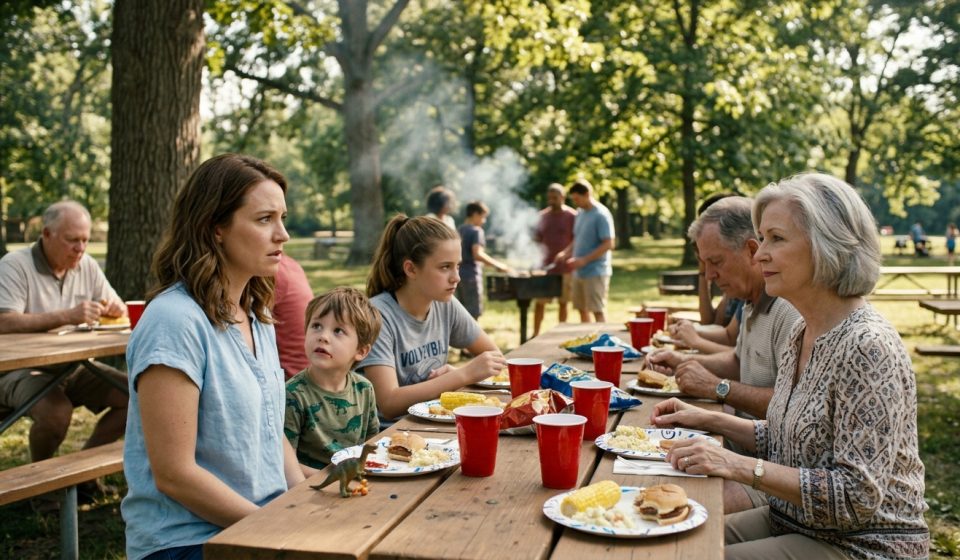
At The Picnic My Mom Said, Next Time Don’t Bring The Kid. No One Defended My Son, Until My Oldest Daughter, Pushed Her Chair Back, And Said. Say That Again. The Whole Table Went Quiet.

When my mother told me not to bring my six-year-old son to another family picnic, twenty-three adults stayed silent, but my thirteen-year-old daughter refused to let those cruel words go unanswered.
Tap LISTEN TO THE FULL STORY below to reveal the narrated video and start listening.
Mom said don’t bring the kid, and those five words changed the atmosphere at our family picnic instantly. My six-year-old son Theo had done nothing to deserve such treatment. He was a sweet little boy who loved dinosaurs, had recently lost his two front teeth, and was simply enjoying a summer afternoon with his relatives. Yet my mother looked straight at me across the potato salad and spoke about her own grandson as though he were an unwanted stranger.
There were twenty-three adults sitting around that table, including my father, aunts, and uncles. Nobody defended my son. Nobody even questioned what my mother had said. The silence was almost unbearable, especially because I knew Theo was old enough to understand when someone didn’t want him around. Then my thirteen-year-old daughter Marlo pushed her chair backward, and the entire table suddenly became quiet.
Marlo had always been unusually mature for her age, but nothing prepared me for the confidence she displayed that afternoon. While the adults sat frozen, she was clearly unwilling to pretend that everything was normal. I could hardly believe what was happening, especially because I’d spent most of my life doing exactly what my mother expected: staying quiet, avoiding arguments, and keeping the family comfortable.
🎧 Listen to the Complete Story
Press ▶ Play below to enjoy the full narrated story.
My name is Karen. I’m thirty-four years old, and I live in Dayton, Ohio, with my two children. Marlo is thirteen, and Theo recently turned six. I work three days a week as a dental hygienist and pick up additional administrative shifts at a walk-in clinic on weekends.
We live comfortably enough to pay our regular bills, but an unexpected expense can still create serious financial stress. I’ve worked hard to provide stability for my children, often putting their needs ahead of my own.
My mother, Patrice, has always been difficult. She doesn’t usually shout or cause dramatic scenes. Instead, she makes hurtful comments while smiling sweetly, leaving people wondering whether they should feel insulted.
She can compliment someone’s clothing before suggesting they were brave to wear it. She can tell me she’s proud of me, then spend the next forty minutes praising a cousin who supposedly accomplished more.
My father, Gil, rarely challenges her. After thirty-seven years of marriage, he’s learned that agreeing with Patrice is easier than confronting her.
For years, I helped support my parents financially despite having two children and my own household expenses.
When their furnace broke during winter, I sent them $1,200. When Dad needed replacement tires and fell behind on insurance payments, I helped again.
Even my mother’s expensive birthday dinner became my responsibility after she conveniently forgot her wallet.
I never complained because I believed helping family was simply what you did for people you loved.
But the support never seemed to work both ways.
When I asked my mother to watch Theo for one weekend so I could take Marlo to a volleyball tournament in Columbus, she claimed she was too exhausted.
That same weekend, I discovered she’d hosted a card gathering with six friends and prepared three different dips.
I was hurt, but once again, I swallowed my disappointment.
My cousin Diana was the only person who regularly questioned why I tolerated this treatment. She understood how much money and emotional energy I’d given my family without receiving the same consideration.
She repeatedly encouraged me to recognize the pattern before it caused even more pain.
Looking back, I wish I’d listened sooner.
Because when Mom said don’t bring the kid at that picnic, I realized her attitude toward my son was something I could no longer ignore.
And with Marlo suddenly standing up in front of everyone, I had no idea what would happen next.