
43 Minutes Before My Cancer Surgery, My Husband Texted. I Want A Divorce. I’m Not Built For A Sick Wife. The Patient In The Next Bed Said…

When my husband texted I want a divorce just minutes before cancer surgery, I thought abandonment was the worst thing waiting for me that morning.
Tap LISTEN TO THE FULL STORY below to reveal the narrated video and start listening.
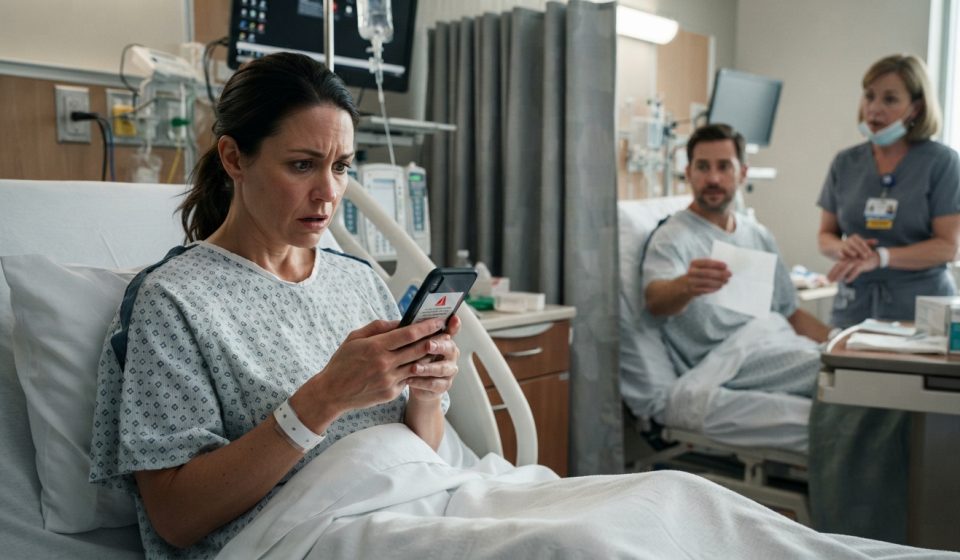
My husband texted I want a divorce forty-three minutes before I was supposed to undergo cancer surgery, adding that he wasn’t built for a sick wife. I was lying in a hospital bed preparing to have my left kidney removed when the message appeared. Then the patient in the next bed offered me a paper napkin, and in the middle of everything I jokingly told him that if I survived, he should marry me. He simply said, “Okay.” A nurse reacted strangely and asked whether I knew who he really was, but before I could understand what she meant, another notification appeared on my phone. It was an emergency management consent for Marigold House Events—and according to the system, someone had completed it in my name.
Marigold House wasn’t just another business asset. I owned sixty percent of the restored wedding venue outside Pittsburgh because my aunt had left it to me. My husband, Sloan, owned twenty percent because I’d once believed giving him a stake was an act of trust and partnership. My sister Camille owned the remaining share. Any sale required agreement from all three of us, and I had rejected every offer because my aunt’s final request had been simple: keep the house standing. Yet the document on my phone carried a signature that looked almost like mine. Its timestamp was 6:22 that morning. At 6:22, a nurse had been marking the side of my body where my surgeon would remove my kidney.
I called Sloan, but his phone went to voicemail. Camille declined my call. Then Sloan posted an announcement in our staff group chat saying that I had chosen to step away from operations while receiving treatment and directing all financial and property questions to him and Camille. He asked everyone to respect my “fragile condition.” Somehow, that word hurt even more than the divorce message. I tried to sit up, but my preoperative nurse pushed my shoulder gently back down. My blood pressure was climbing, my surgeon was waiting, and delaying the operation could cost me the operating room.
🎧 Listen to the Complete Story
Press ▶ Play below to enjoy the full narrated story.
I told the nurse that my mother was coming. She checked the visitor list and gave me an answer I wasn’t expecting.
Sloan had called before dawn and told my family that my surgery had been moved to the following day.
My mother lived only forty minutes away. If she’d known the truth, she would have been sitting beside me. Suddenly, my husband’s actions felt different. He hadn’t merely decided to leave his sick wife. Before sending that message, he had made sure the hospital room would be empty.
The curtain beside my bed shifted, and a man’s hand appeared holding a folded paper napkin. It was Matt, the patient waiting for surgery in the neighboring bed. He quietly told me that whatever my face was doing, his had been doing the same thing an hour earlier.
I laughed once before the tears finally came.
Matt explained that an old climbing injury had damaged his abdomen and that he taught boring classes about rules and paperwork. When I told him about the divorce, the lie to my mother, and the document apparently completed in my name, his questions became surprisingly precise.
Had I saved the original notification?
Yes.
He told me not to forward or edit it. Instead, I should take screenshots showing the time and send copies somewhere only I controlled.
I teased him about teaching paperwork. He called it very boring paperwork.
Soon the nurse returned to take me into surgery. I was shaking so hard my teeth touched, and I looked toward the stranger in the neighboring bed. That’s when the ridiculous joke escaped me: if I survived this, marry me, because apparently I was terrible at choosing husbands without hospital supervision.
Matt’s answer was unexpectedly simple.
“Okay.”
The nurse checking his wristband suddenly stopped.
After Matt was taken away for his own procedure, she leaned toward me and quietly asked whether I knew who he really was.
I didn’t.
And before she could explain why that question mattered, it was time for my surgery.