
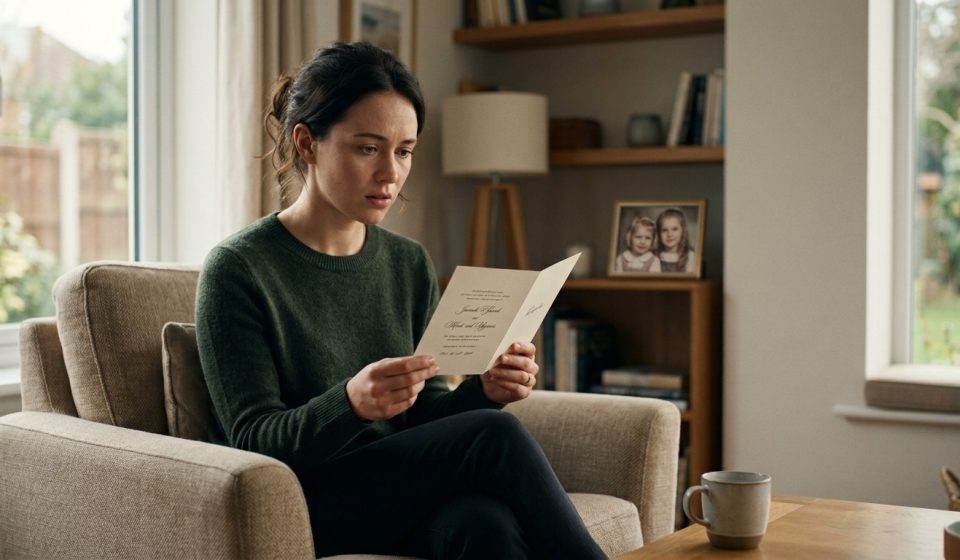
Sister Resented Me For Being Sick As Kids And Wished Me D*ad. Years Later She Apologized And Invited Me To Her Wedding. But When She Saw I Was Pregnant, She Pushed Me.

My estranged sister invited me to her wedding after years of resentment had destroyed any real relationship between us. But before I could decide whether her invitation deserved a second chance, I had to confront everything that had driven us apart.
Tap LISTEN TO THE FULL STORY below to reveal the narrated video and start listening.
When my estranged sister invited me to her wedding, I should have been happy—or at least pleasantly surprised. Instead, Maggie’s invitation left me wondering why she wanted me there at all, because the truth was that my older sister and I had never really gotten along.
Our problems went all the way back to childhood. I was the sick child in our family, constantly dealing with health problems that required treatments, surgeries, and long hospital stays. There were stretches when my parents and I practically lived at the hospital while doctors tried to get me healthy again. Naturally, my parents spent countless anxious nights beside me.
That meant Maggie sometimes stayed with our grandparents. They treated her kindly, but Maggie grew up believing that my illnesses had stolen our parents from her. In her mind, I was responsible for the months she spent away from home and for every moment of attention our parents gave me while I was sick. That resentment didn’t disappear when my health improved.
🎧 Listen to the Complete Story
Press ▶ Play below to enjoy the full narrated story.
From my perspective, however, Maggie’s version of our childhood ignored everything our parents did for her. Once my health stabilized and I could return home, they immediately reunited the family and made enormous efforts to ensure Maggie knew how important she was to them.
They took her on memorable trips to Disney. They organized elaborate birthday parties to make her feel special and celebrated. They showed up to cheer at her basketball games every weekend and spent quality time with her whenever they could. Our parents weren’t trying to choose one daughter over another—they were trying to give both of us what we needed.
But none of it seemed capable of changing Maggie’s mind.
She remained convinced that she had been abandoned during those months with our grandparents. Whenever arguments happened in our family, Maggie returned to the same accusation: our parents had supposedly loved me more. The childhood grievance became something she could repeatedly use to make them feel guilty or strengthen her position whenever she wanted her way.
For years, I mostly stayed quiet. When Maggie complained or tried to start another fight, I avoided challenging her because arguing seemed pointless. But eventually I left home for college, and distance gave me a completely different perspective on our relationship.
I began realizing just how one-sided things had become. Maggie constantly expected everyone to understand how she felt, yet she rarely seemed interested in how I felt about growing up sick, spending so much time in hospitals, or being blamed for circumstances I had never chosen.
My patience started disappearing.
During college breaks, I would return home and inevitably hear Maggie resurrect the same argument about being neglected and our parents supposedly loving me more. This time, instead of silently absorbing it, I pushed back. I told her to stop and leave me alone, which usually resulted in another shouting match.
It felt like we were trapped in an argument neither of us could escape.
And now, after everything between us, my estranged sister invited me to her wedding.
But long before that unexpected invitation arrived, our relationship was heading toward a breaking point. On my twenty-first birthday, my parents organized a beautiful celebration surrounded by family and friends. Maggie attended too—but instead of simply celebrating with me, she began drinking and telling anyone willing to listen that I was the family’s “golden child.”
She complained that our parents had always favored me and claimed she’d never received the same love or attention.
As the evening continued and Maggie became increasingly bitter, what should have been one of my happiest birthdays started feeling dangerously familiar.
And this time, I wasn’t sure I could stay silent.