When Did You Watch Someone Fail So Badly As A Parent That You Knew, Deep Down, Something Terrible Was Coming?

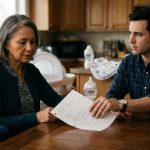
After my ex-wife got primary custody, every visit with my son left me more worried about the strange rules shaping his life. I kept documenting everything because something inside me said that one day, I might desperately need the proof.
Tap LISTEN TO THE FULL STORY below to reveal the narrated video and start listening.
After my ex-wife got primary custody of our son Dashiel in the divorce, I began noticing something unsettling every time he returned from her house. He seemed a little more managed and a little less like himself. There was always some new parenting philosophy or wellness experiment, and although each one could be explained away on its own, together they left me with the growing feeling that something terrible was coming.
Once, Dash came home after a “detox week” during which every processed food had been removed from his diet without his pediatrician being consulted. He was dizzy and pale. Another time, my ex-wife Wren followed a no-screens-no-shoes phase recommended by her boyfriend’s wellness coach. Dash returned with a stone bruise on his heel but barely complained because he’d apparently been taught to think of pain as nothing more than information passing through his body.
I repeatedly raised my concerns in court, but the judge’s position remained the same: a mother’s parenting philosophy wasn’t enough to modify custody without demonstrated harm. Eventually, I stopped trying to convince the court. Instead, I started documenting everything—dates, photographs, exact quotes, and every strange incident—because some part of me already understood where this might be heading. If something serious ever happened, I feared nobody would believe me without proof.
🎧 Listen to the Complete Story
Press ▶ Play below to enjoy the full narrated story.
There was another reason those increasingly unconventional parenting choices terrified me.
Dashiel had a severe peanut allergy.
He’d been diagnosed at eighteen months old, and this wasn’t a mild sensitivity that could simply be watched. His allergy was the anaphylactic kind—the kind where a single bite could close his throat within minutes. He had carried an EpiPen since before he could even talk.
In my home, that EpiPen was never optional.
Then Wren started dating Callahan Voss.
Callahan operated Hollow Creek Retreat, a healing and wellness community located roughly two hours upstate. Among its offerings was a summer program for children called the “Resilience Intensive,” built around a philosophy Callahan had apparently spent years developing.
The philosophy sounded especially disturbing to me once I understood what it meant.
Callahan believed that children’s fears—including what could be considered medical fears—were often stories adults had taught them. A genuinely resilient child, according to the program’s thinking, could learn to trust their own body rather than depending on a device for safety.
With Dashiel’s medical history, those ideas weren’t merely unusual to me.
They were frightening.
Three days after his ninth birthday, I finally discovered what those beliefs could mean for my son.
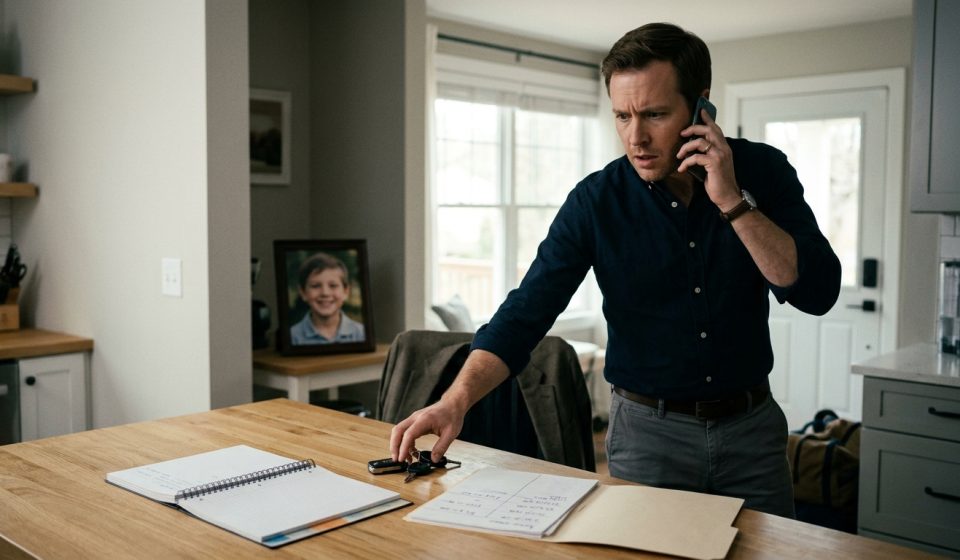
My phone rang from a number I didn’t recognize.
Before the young woman on the other end had even finished explaining why she was calling, I was already reaching for my keys. I immediately asked where Dashiel’s mother was.
The woman didn’t know.
Her name was Priya. She was a nineteen-year-old counselor working at the retreat, and she was crying so hard that understanding her was difficult.
Dash had eaten something during the communal dinner. She didn’t know exactly what it was.
Now he was having trouble breathing.
Priya couldn’t find the medication she desperately needed. She explained that the children weren’t supposed to keep medication inside their cabins because it went against the program’s philosophy.
And she couldn’t reach Wren.
Suddenly, all those months of documenting what happened after my ex-wife got primary custody no longer felt like the precautions of an anxious father.
My son’s severe peanut allergy was no mystery. The danger was known. His EpiPen had always been part of his life.
Yet now my nine-year-old was two hours away from me, struggling to breathe inside a wellness program that apparently viewed dependence on medication as something children should overcome.
I told Priya to call 911 immediately.
Then I started driving.
I was an hour and forty minutes away.
I called Wren.
The phone went to voicemail.
I called again.
Voicemail.
Then I tried again, knowing that somewhere two hours away, my son was waiting for an adult to make the right decision—and I had no idea whether anyone would.