We Can’t Afford To Include Your Kids, Aunt Announced. “The Vacation House Is Expensive. Maybe Stay Home This Year.” My Children’s Excitement Died. I Nodded Quietly.

My aunt said they couldn’t afford to include my kids in the family vacation, and I watched their excitement disappear as they heard every word. I quietly agreed to stay home because I already knew something about the beach house my aunt didn’t.
Tap LISTEN TO THE FULL STORY below to reveal the narrated video and start listening.
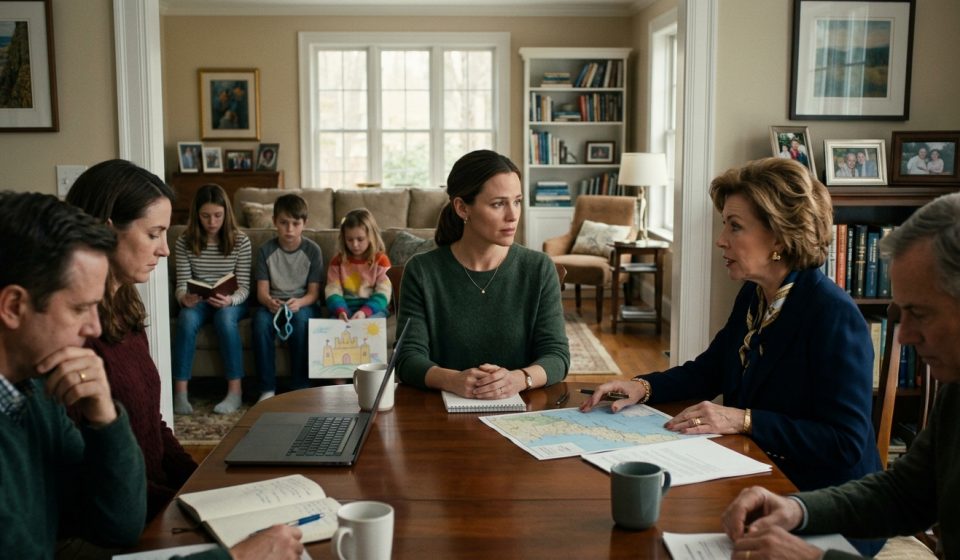
My aunt told me they couldn’t afford to include my kids in the family vacation because adding my three children would supposedly throw off everyone’s carefully calculated budget. Emma, Lucas, and Sophie were listening from the next room, and I watched their excitement disappear as they realized exactly what Aunt Diane meant: everyone else was going, but they weren’t wanted.
Diane had appointed herself the unofficial treasurer of our extended-family gatherings decades earlier and carried the authority as though someone had elected her. During the planning meeting, she explained that the vacation house was expensive and that every person’s cost had been carefully calculated. Her solution was simple: perhaps my children and I should stay home that year. I didn’t argue. I gathered my children and left quietly because I knew something Diane didn’t.
The beach house she’d chosen for their exclusive family vacation belonged to me. It had been mine for five years, and two months later, when everyone arrived expecting their perfect getaway, I already knew I’d be there. But understanding how my family managed to rent a house they didn’t know I owned requires going back to an inheritance almost nobody knew existed.
🎧 Listen to the Complete Story
Press ▶ Play below to enjoy the full narrated story.
My grandmother Adelaide had always been the quiet center of our enormous family.
She raised six children in a modest Pennsylvania home, stretched a teacher’s salary remarkably far, and somehow kept peace among children who grew into adults with dramatically different personalities, values, and incomes.
Aunt Diane was the eldest.
She became a corporate attorney, married into wealth, and rarely allowed anyone to forget either accomplishment.
My mother Catherine occupied a very different position within the family.
She had married my father, Frank O’Brien, a carpenter who worked with his hands and never earned more than about $60,000 annually. They raised me in a small house, didn’t take glamorous vacations, and lived a quietly happy life that our wealthier relatives never seemed able to understand.
To Diane, that made my mother a disappointment.
At family gatherings, she’d make remarks about how Catherine could have done so much better.
Mom rarely responded.
She’d learned that arguing with Diane accomplished nothing.
When my mother died from cancer three years earlier, even Diane’s eulogy carried the same subtle condescension. She described Catherine as someone who had “lived simply.” Sitting in the front row with my children, I understood what she really meant.
I said nothing.
What Diane didn’t know was that Grandma Adelaide had secrets of her own.
Grandma was the daughter of a Maine fisherman, a part of her past she rarely discussed after moving south for college and marrying my grandfather. But she’d never lost her love for the coast—the salt air, the waves, and the quiet peace of sitting on a porch overlooking the water.
When I was twelve, she took me to Maine for a week.
Just the two of us.
We stayed in a small rental cottage on Crescent Beach, collected shells, ate lobster rolls, and watched sunsets paint the sky in colors I’d never seen before.
During that trip, Grandma told me Maine was her favorite place in the world.
Then she said something I wouldn’t fully understand until years later.
Someday, she wanted me to have somewhere like it.
Somewhere that was entirely mine.
At twelve, I thought she was simply sharing a dream with her granddaughter.
Years later, when her will was read, I finally understood.
The family knew about the ordinary estate Grandma left behind.
But almost nobody knew there was a second, private document.