
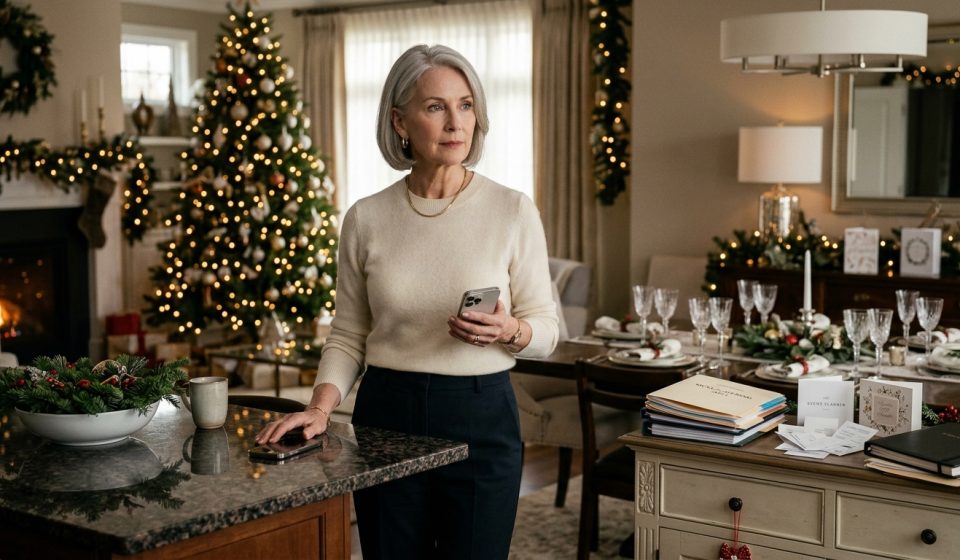
“We’re Not Spending Christmas With You,” My Daughter-In-Law Said. “Cool” I Replied. Then I Added One Sentence: “Well… Christmas Is Cancelled Then…”

When my daughter-in-law said, “We’re not spending Christmas with you,” I gave her the calm answer she clearly wasn’t expecting. Then I looked at everything I’d already paid for and realized her version of Christmas depended on far more than my absence.
Tap LISTEN TO THE FULL STORY below to reveal the narrated video and start listening.
When my daughter-in-law said, “We’re not spending Christmas with you,” the words came through the speakerphone crisp and sharp, almost as if Sloane had rehearsed them beforehand. For a moment, my entire house went silent. I wasn’t exactly shocked. Her bluntness simply confirmed something I’d been trying not to acknowledge for months, and instead of arguing, pleading, or demanding an explanation, I rested my hand against the cool granite of my kitchen island and gave her one simple response: “Cool.”
Sloane clearly wasn’t expecting that. So I added another sentence: Christmas was cancelled. The reaction on the other end was immediate. I heard a strange sound somewhere between a gasp and a stumble before Sloane demanded to know what I meant. She barely got the question out before I ended the call. Silence returned to my kitchen, except this time it didn’t feel tense. It felt clean.
Then I looked toward my dining table. Spread across it were catering confirmations, receipts for rented tables and chairs, invoices from floral designers, and all the paperwork required for an elaborate holiday celebration. Every document carried my name: Diane Miller. More importantly, every deposit had come directly from my bank account. Sloane apparently didn’t want Christmas with me, but she still expected the Christmas I’d paid for.
🎧 Listen to the Complete Story
Press ▶ Play below to enjoy the full narrated story.
I sat down and opened my laptop.
The decision didn’t require another argument.
I called the catering company first and calmly cancelled my service for the 25th. The receptionist processed it without asking questions.
Then I cancelled the dishware rental.
The serving staff.
The bakery.
In less than twenty minutes, I’d dismantled an elaborate holiday event planned for thirty people.
It was a celebration they apparently intended to enjoy without me while continuing to spend my money.
When I finished, I closed the laptop and made myself a cup of tea.
The following morning felt unusually peaceful. I sat on my back patio beneath the crisp winter sun and stopped searching for excuses for my son Trevor or explanations for Sloane’s behavior.
Instead, I considered how we’d reached this point.
For years, I’d become the family’s event planner and silent financier. At first, helping Trevor financially had seemed natural. I wanted to give my son a little support while he established his adult life.
After he married Sloane, however, helping gradually became an expectation.
Sloane chose expensive gourmet menus. She criticized my table linens for looking dated. She dictated guest lists and decided how celebrations should look.
And I kept paying.
Whenever keeping the peace required another swipe of my credit card, I did it.
But after hearing “We’re not spending Christmas with you,” something about that arrangement suddenly became impossible to ignore.
I opened my banking app.
Three years earlier, I’d added Trevor as an authorized user on one of my credit cards for household emergencies.
Yet recently, that card had been paying for things that weren’t emergencies at all: imported floral centerpieces, expensive wine I didn’t drink, and high-end corporate gifts for Sloane’s bosses.
I navigated to the card-management section.
I wasn’t furious.
I wasn’t crying.
I simply felt certain.
I selected the secondary card and cancelled it permanently.
Then I remembered something else.
Every month, I automatically sent Trevor and Sloane $250 to help pay for their landscaping service, an arrangement that had begun when they’d first bought their house and money was tight.
Their financial situation had changed.
My habit hadn’t.
So I deleted that transfer too.
Looking at the screen, I finally understood what had happened over the years.
My money had quietly helped build the comfortable life from which they were now excluding me.
I put my phone away and decided to spend the rest of the beautiful winter day cleaning my garage.
Around noon, while I was peacefully chopping carrots for vegetable soup, my phone suddenly buzzed on the kitchen counter.
It was Sloane.
She was standing at a wine shop.
And apparently, she’d just discovered that my card no longer worked.